Turning Landscape into Colour
Turning Landscape into Colour is a research site and community exploring the material and social condition of landscapes impacted by the effects of industrial scale coal and metal mining. Much of the research focus is on the legacy of mining in South Wales, Scotland, the South West and North East of England.
As mineral extraction is expanding in many parts of the world - serving the industries we call ‘sustainable’ - landscapes and communities are threatened by the depletion and pollution of natural resources they rely on to survive.
The research in these pages shows some of the early stages of a long term ongoing investigation into the formation and life cycle of a material that signals the environmental catastrphy we are living in.
__________________________________________________________________________________________________
Where ever mines have been dug, water will find its way back into the chambers left by extrated ground. Over time, rain water seeps back down into the exposed hollowed out subterrainian landscape of former mines.
This process has the combined significance of a geological, environmental and social event in time. One that defines and describes the industrial scale extraction and exploitation of mineral materials and people. Landscapes deformed and damaged by inducstrial scale extraction are exposed to an environmental catastrophy caused by the damage that that same extraction is doing to the climate.
The water that enters these tunnels and chambers travels, collecting the dislodged and exposed mineral residues, the leftovers of the mining process as it washes through the ground. Eventually water reaches back to the surface, pouring into rivers, bringing those displaced minerals with it. Sometimes these can be very toxic: arsicnic, mercury, lead, iron, manganses, copper. Sometimes they are just the oxidised irons, but these suck the oxygen from the water as they arrive - leaving everything else without life.
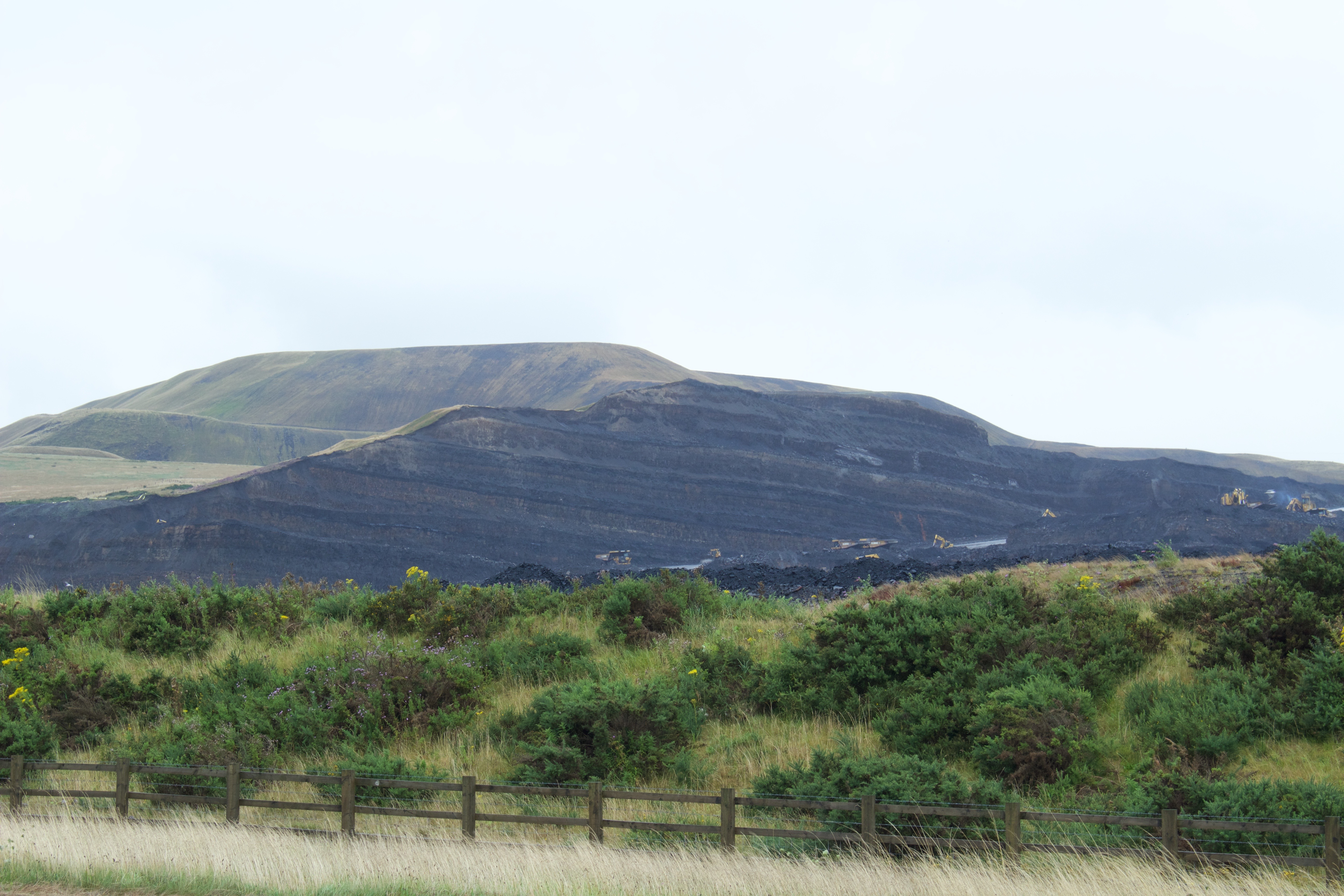
Photograph of Tower open cast coal mine 2015. Coal extraction at the Tower opencast site came to an end in 2017 after changes in environmental regulations.

Six Bells and Abertillery showing underground mine workings overlaid with surface topography and infrastructure
Historic mine map of Vivian pit Abertillery, the source of the pollution forming now at Six Bells.
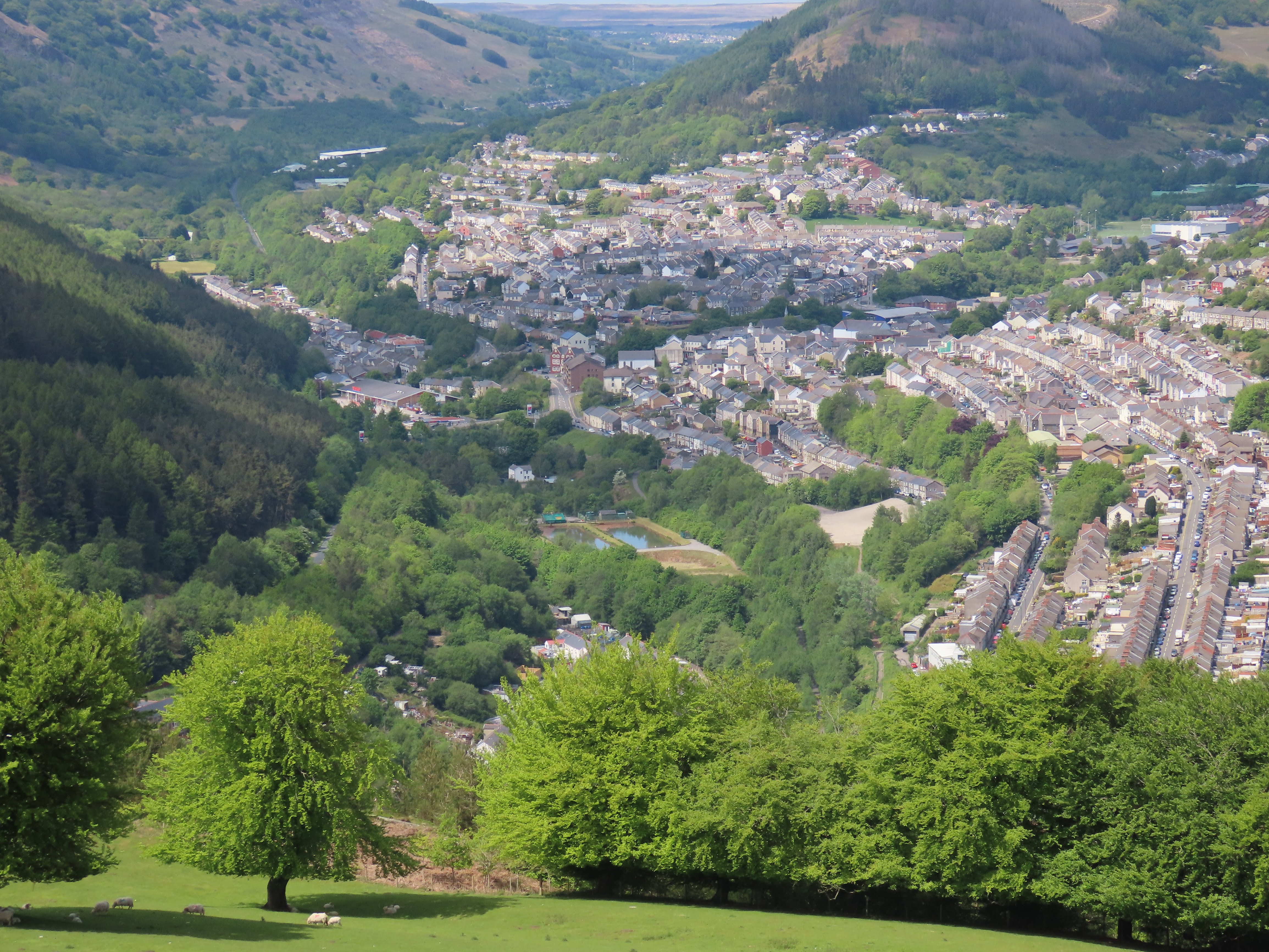
Six Bells and Abertillery with the mine water treatment scheme just visible in the lower middle of the picture 2020.
Overlaying the material effects of landscape are the cultural complexities that are woven so deeply into each landscape structure that they become inseparable; the geological, the social; the ecological and the economic. These pages consider how the complicated interdependencies between humans and the earth can be described through a single material.

The coal mine ochre colours have a different life from ‘traditional’ or historic ochres. These new or geologically young minerals are brought into being through the treatment of polluting water in former coal mining landscapes across the UK. The conditions of each individual landscape influences the minerals forming there.
The discovery of these qualities has happened through making artworks that follow five individual ochres from their geological landscape contexts through physical transition into usable pigments for paint. A process that simultaneously exposes layers of sociopolitical history, along with the contemporary cultural and economic connections to place.
Ochre is the oldest of cultural materials with roots stretching back to the beginning of human history. The mine water ochres can be aligned with traditional historic ochre - a mineral that has been found sprinkled on cave floors, caked onto the buried bones of ancient humans;1 mixed with binder and turned into paint on cave walls, some 30,000 years ago and forming patterns on the built walls of early human settlements at Djade al- Mughara, Aleppo, Syria 11,000 years ago.2
The research has developed and been informed through a focused practice of painting and its traditions, referring to the earliest marks on cave walls, neolithic marks and the minimalist marks of the modernist / post modern traditions: Painting has been a line to follow and also to drift off from. Collaboration with chemists, earth scientists and paint manufacturers have helped to shape and understand the analytics of the material as pigment, from particle size, transparency and lightfastness, using x-ray diffraction, scanning electron microscopy (SEM) and cross polarised light microscopy, to drying, burning, grinding and sieving, scaling up, ratios of one medium to another to find a route to get a paint that carries the weight of the conditions of its formation, that can be applied to a wall.
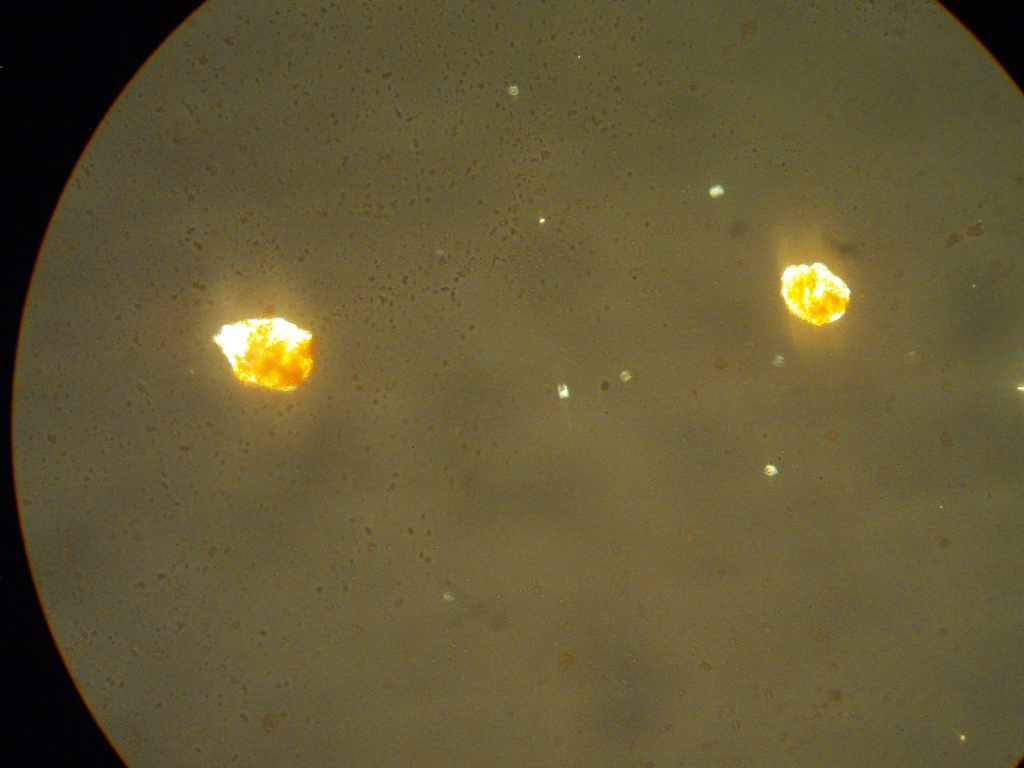
Cuthill ferrihydrite digital photograph using cross-polarised Light (XPL) x1000, field of view 0.1 mm.
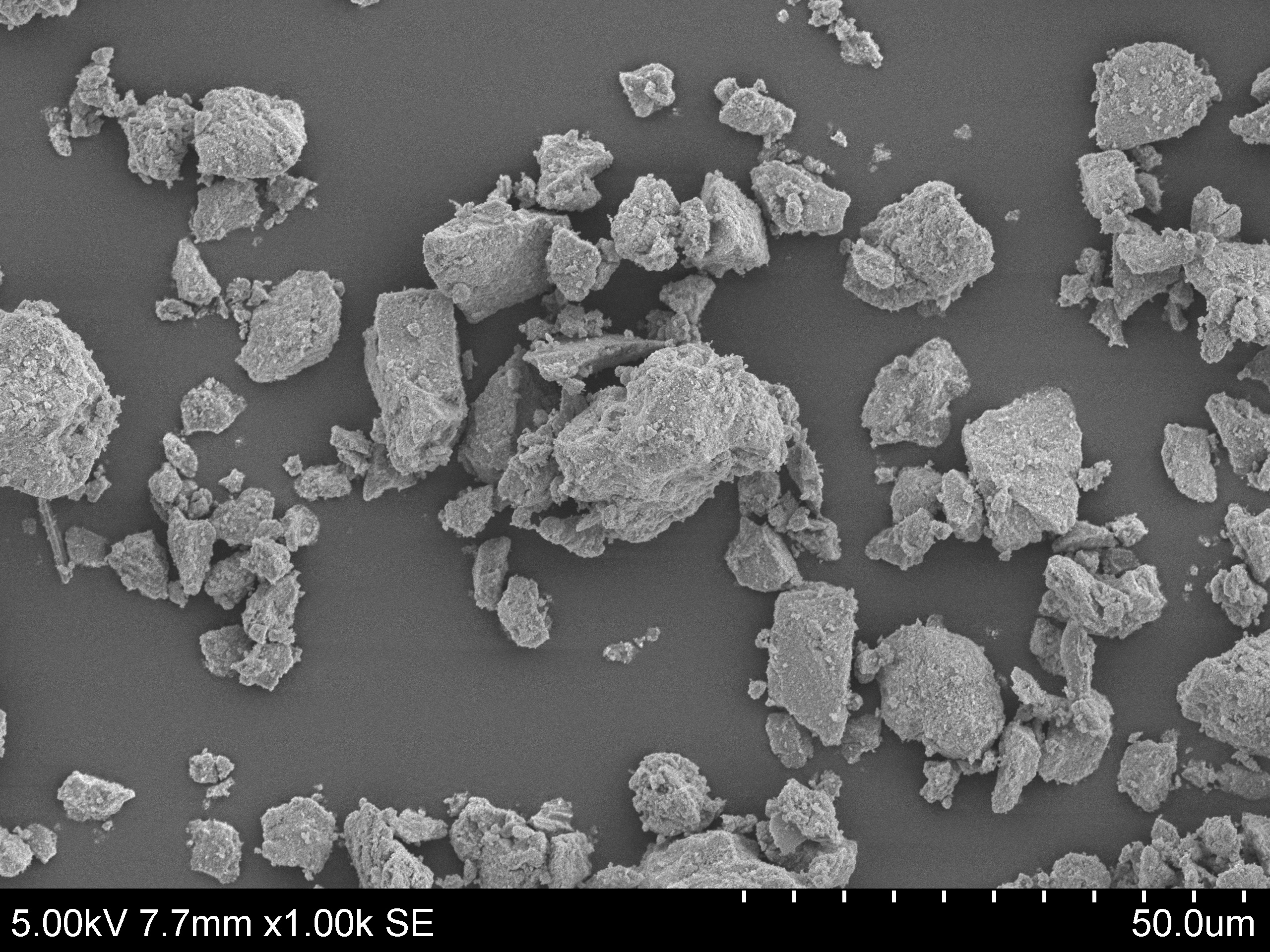
Scanning electron microscopy (SEM) Six Bells ochre
Coal Authority Video
In 2018 the Coal Authoity produced a short film oulining the processes involved in their mine remediation programme and ochre formation. The film shows the collaborative between Onya and the Coal Authority.
Turning Landscape CIC Community Interest Comany was based Ty Ebbw Fach in the former mining village of Six Bells, Blaenau Gwent, South Wales between 2020 - 2023.
The organisation continues now in a new form supporting workshops and talks about the formation of colour from the mines into usable pigment material, bringing together people with interest in the social, economic and environmental legacies of coal mining and extractive practices.
The research was developed by Onya McCausland through Leverhulme research funding between 2018 - 2021.
1 The Red Lady of Paviland: OUMNH Q.1. Visit to see the remains at Oxford Museum of Natural History 2016. One of the richest 1Palaeolithic sites in Europe is in South West Wales on the Gower Peninsula between Port Eynon and Rhossili. Sollas, W.J. The Journal of the Royal Anthropological Institute of Great Britain and Ireland, Vol.43 (Jul. - Dec., 1913)
2 National Geographic online: http://news.nationalgeographic.com/news/2007/10/photogalleries/wip-week50/photo7.html, accessed: 217th December 2014. And: Caroline Cartwright (2008) The World’s Oldest Wall Painting In Syria?, Palestine Exploration Quarterly, 140:1, 3-3, DOI: 10.1179/003103208x288645 http://dx.doi.org/10.1179/003103208x288645 Published online: 02 Dec 2013
Turning Landscape into Colour Abstract, link to PhD: https://discovery.ucl.ac.uk/id/eprint/10039744/
Further info on individual artworks www.onyamccausland.com
Six Bells Red

We make water based wall emultion paint using pigment derived from the residues that form from polluting mine water as it oxidises. Each batch of paint is made on request. Please contact Onya McCausland if you wouldlike to discuss a project.

The recipe for this paint is based on an environmentally responsible and susatinable natural potassium silicate base.

Aberbeeg Hospital project 2022/3. The wooden ecological outbuilding is stained with Six Bells Red bound in sunflower oil resin. The paint protectsand weather proofs the wood.
 Aerial photograph of Six Bells, Abertillery, Blaenau Gwent, South Wales mine water treatment scheme showing the lakes of oxidising water pumped out of mines, and away from polluting the river.
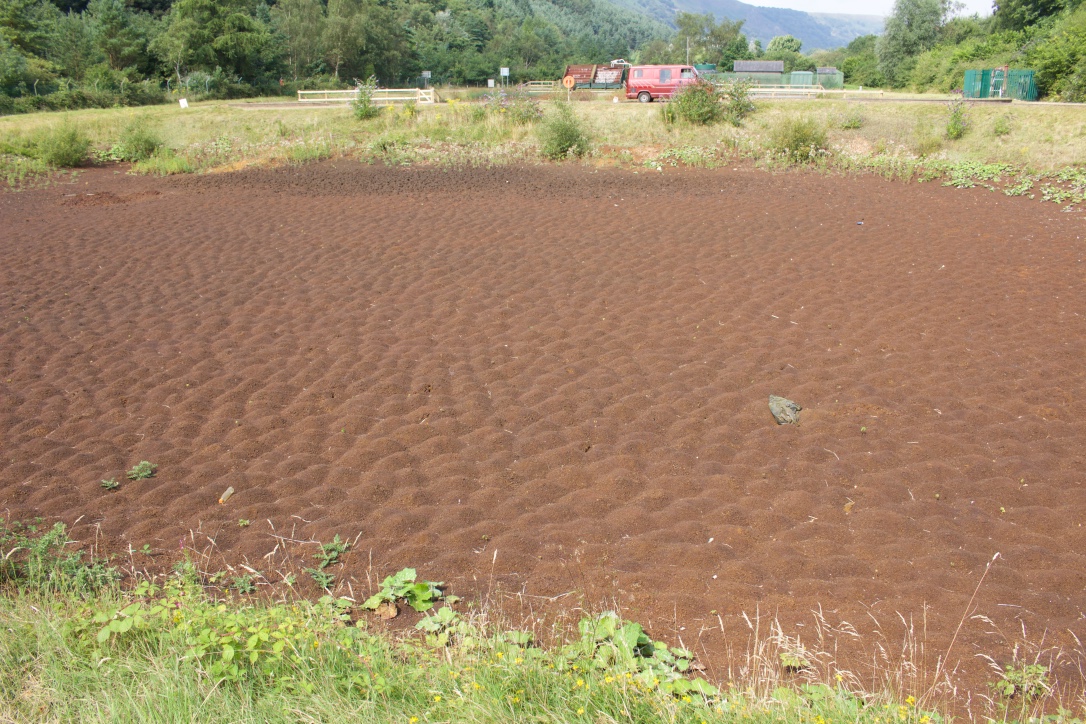
Iron oxide sludge residue from treated mine water at Six Bells
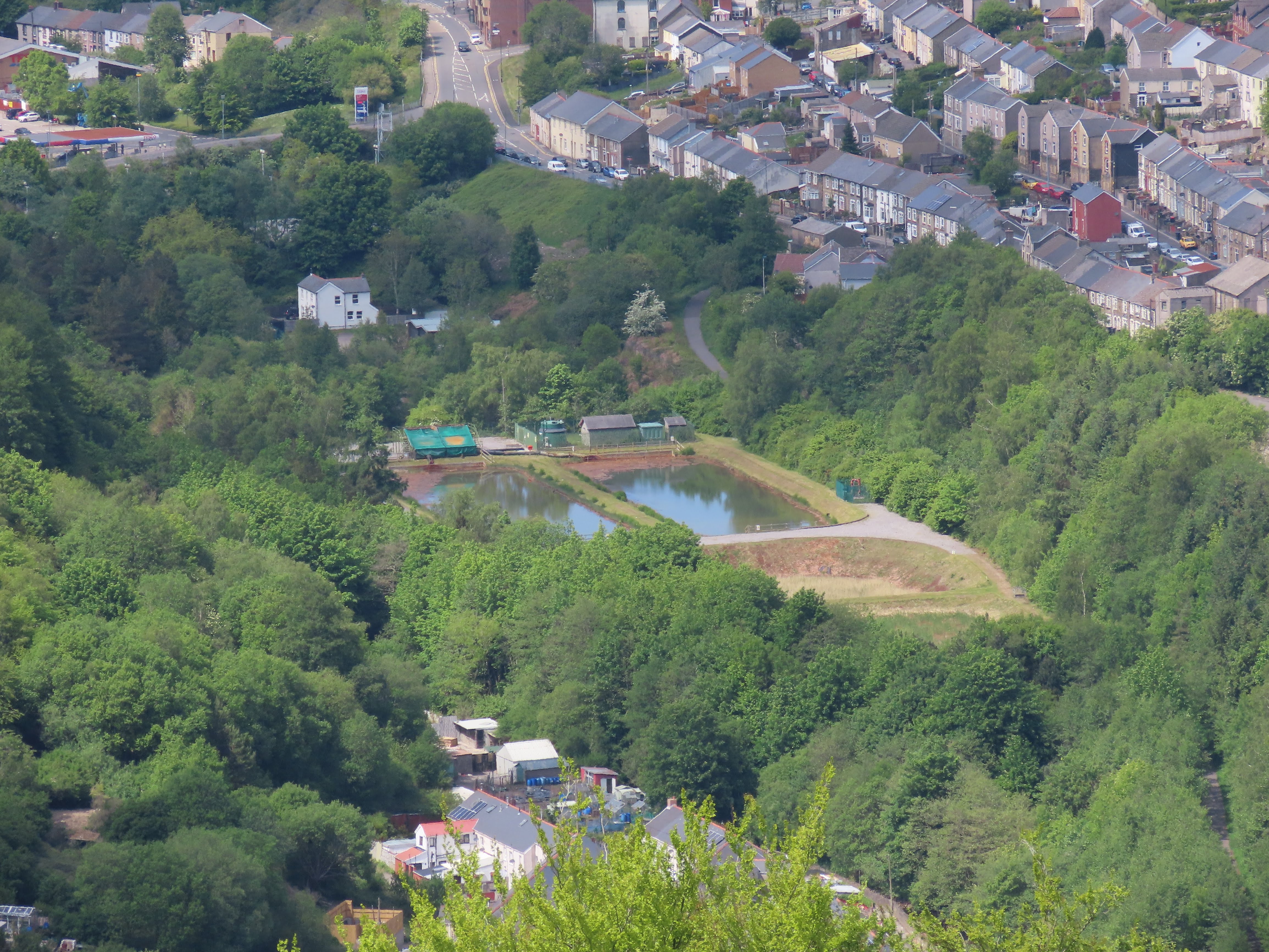
The minewater treatment site viewed from Mynydd Llanhilleth
Archival material:
On Friday 11th December 2020 during the Covid-19 pandemic Turning Landscape made and launched the worlds first ever exterior grade wall paint made from mine water ochre. Six Bells Red is now made in the former mining village of Six Bells. Alongside the wall paint Michael Harding (paints) made a series of 1000 40 ml tubes of high quality artists oil paint; Six Bells Burnt Ochre. These are for sale on this website, or if you make the journy to Six Bells we will give you a tube.
All proceeds from any sales we make are recycled back into the programme which supports local events, volunteers, production. If you run a public space, are a community group or project that would like to use either of these paints, you can apply to have some. Please email us.
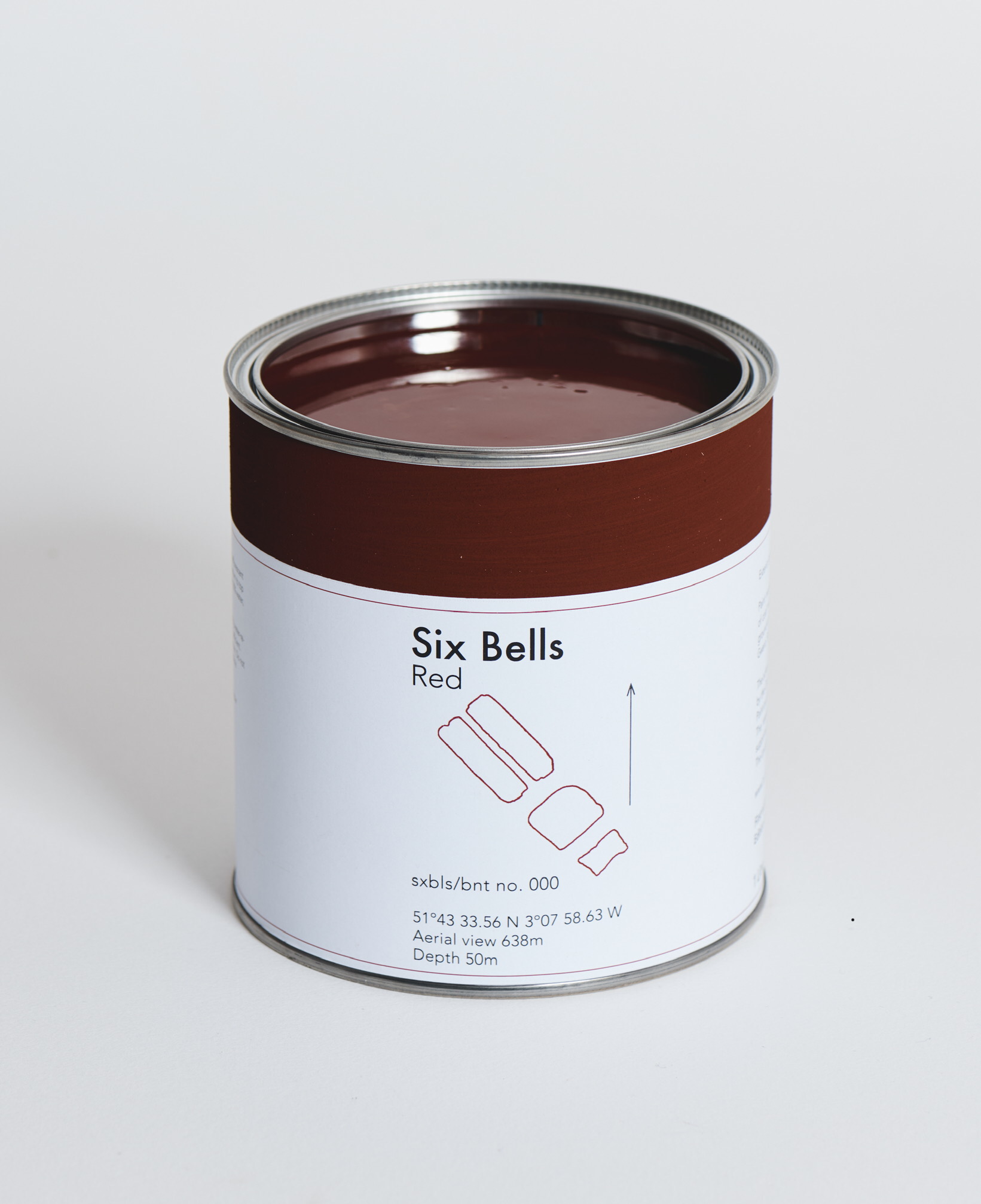
IL tin exterior grade wall paint Six Bells Red 1st ed. 2020
The pigment to make Six Bells Red has been specially created by burning the raw ochre at a specific temperature to create the distinctive red colour. This ochre forms as a residue during the treatment of polluting mine water making this a completely sustainable source of colour pigment.
40ml tube of Six Bells Burnt Ochre artists’ oil paint 1st ed. 1000

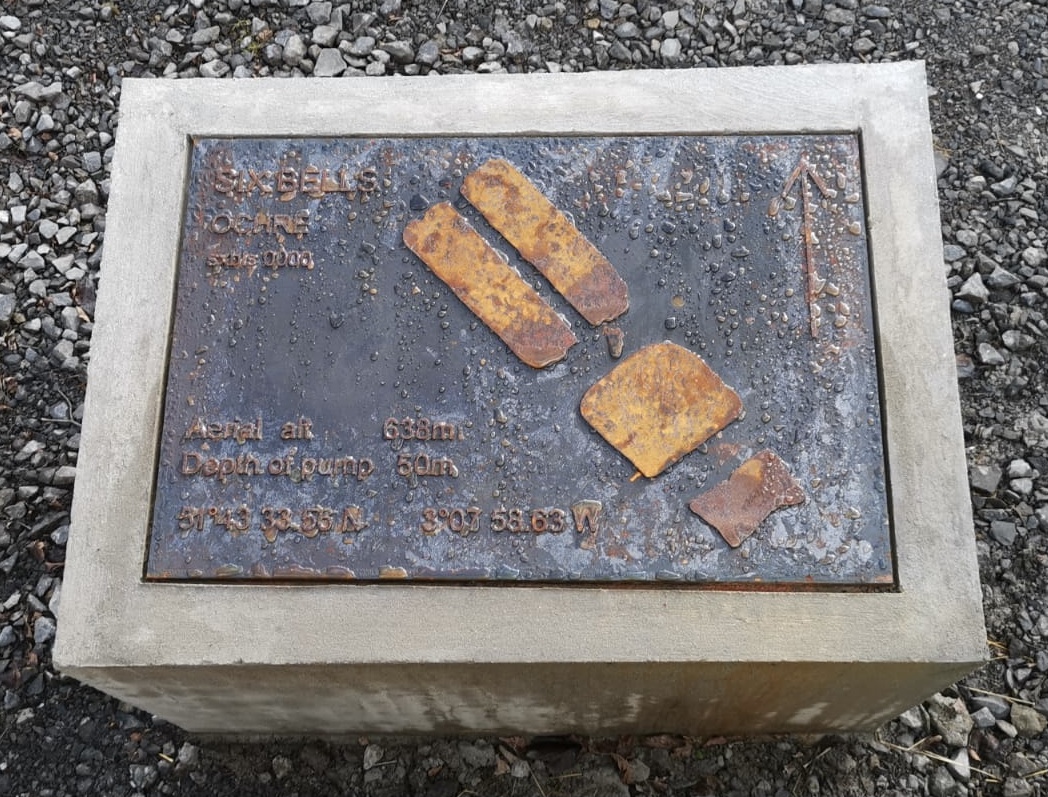
This cast iron marker plaque 2020 has been installed at the mine water treatment site designating the site as the permenat source of this colour.. The map will be visible from the footpath at the far north end of the perimeter fence.
Photos from the Launch Day..
Launch Event and Plaque Unveiling December 11th 2020 @ noon
The launch was held online with a physical presence at Six Bells Mine Water Treatment Scheme in South Wales, seeing the unveiling of a new public artwork - a map cast in iron marking, naming, claiming the site of the ochres’ formation.
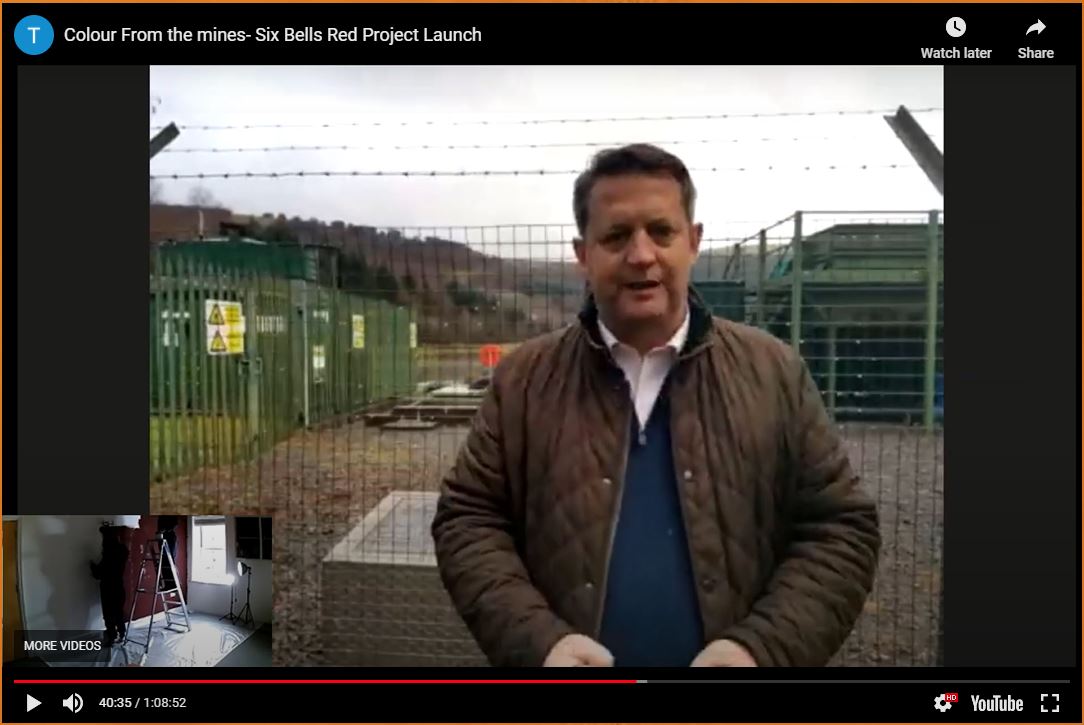
Alun Davies MS unveils the plaque at Six Bells Mine Water Treatment Works
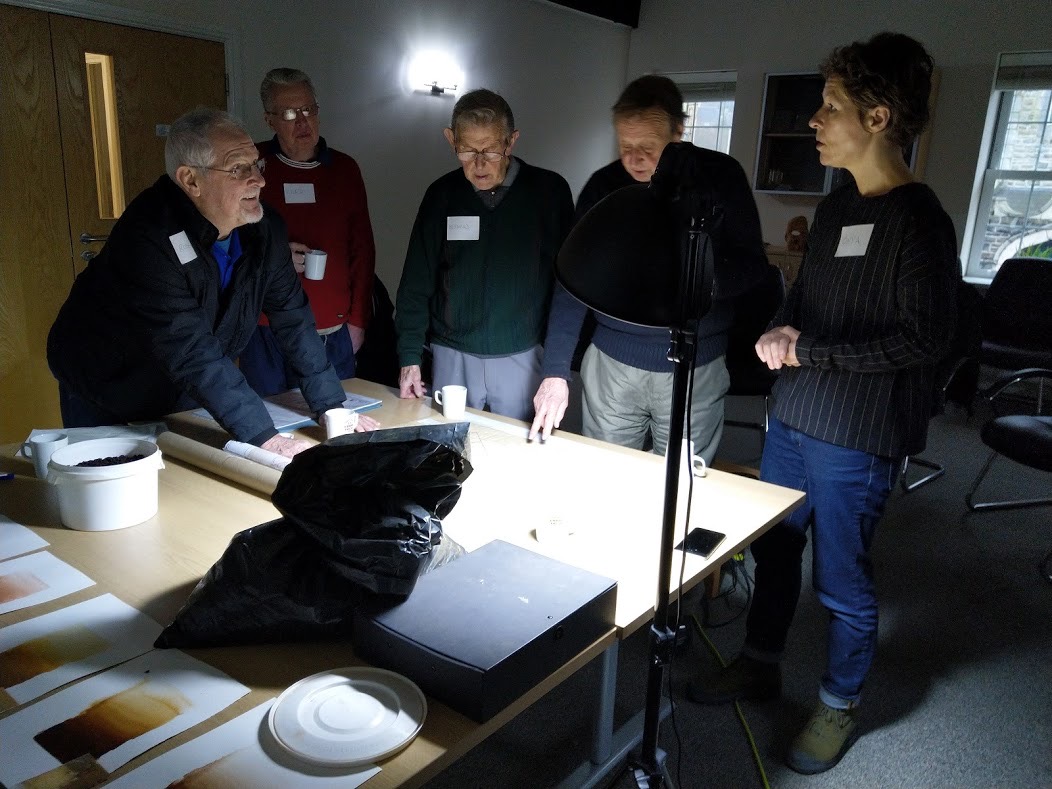
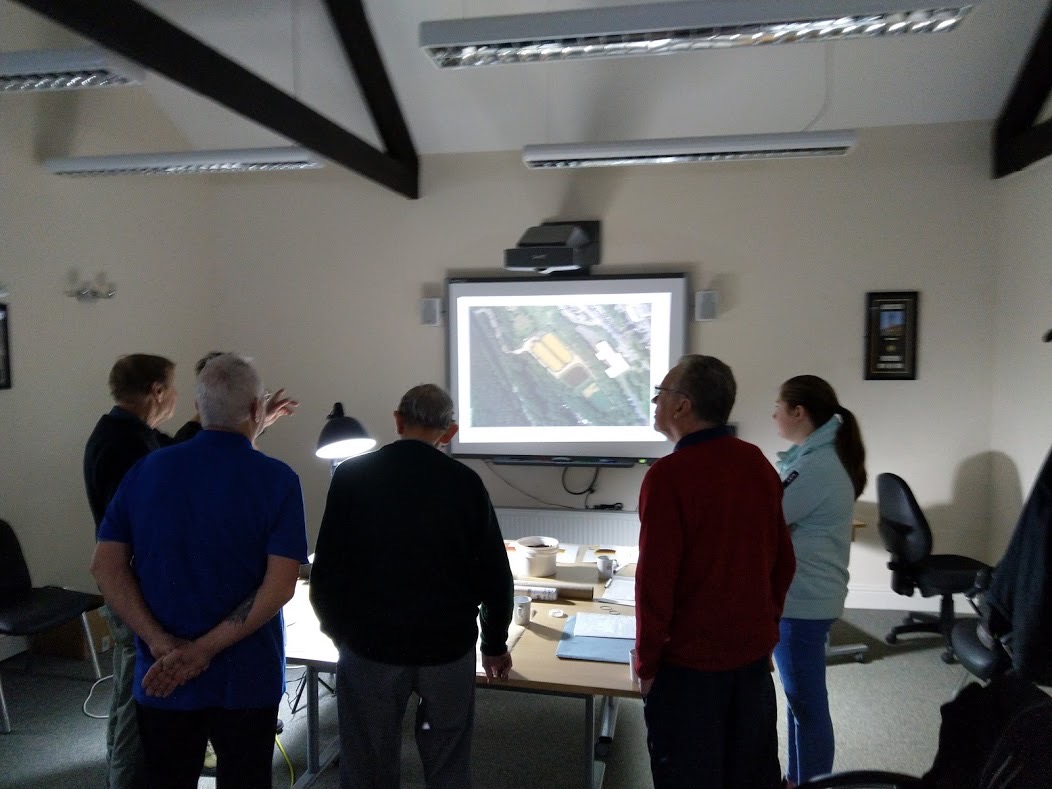
Dr Onya McCausland and former NCB surveyers and mine workers trace the route of minewater on vintage NCB plans in Jan 2020

A close up of the cast iron map the day after it was unveiled

The builders prepare to pour the concrete for the markers’s plinth
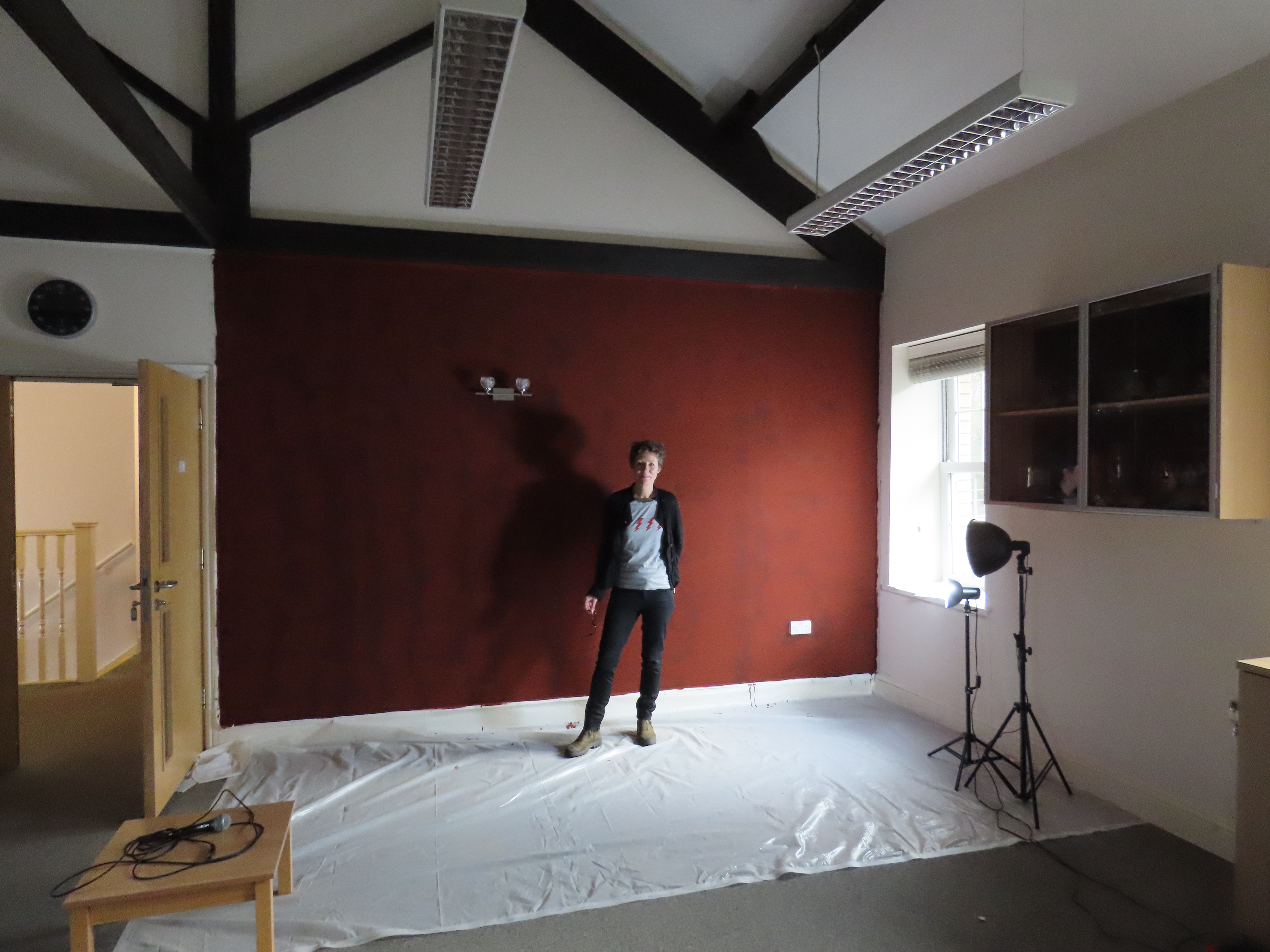
Onya in front of the newly painted wall
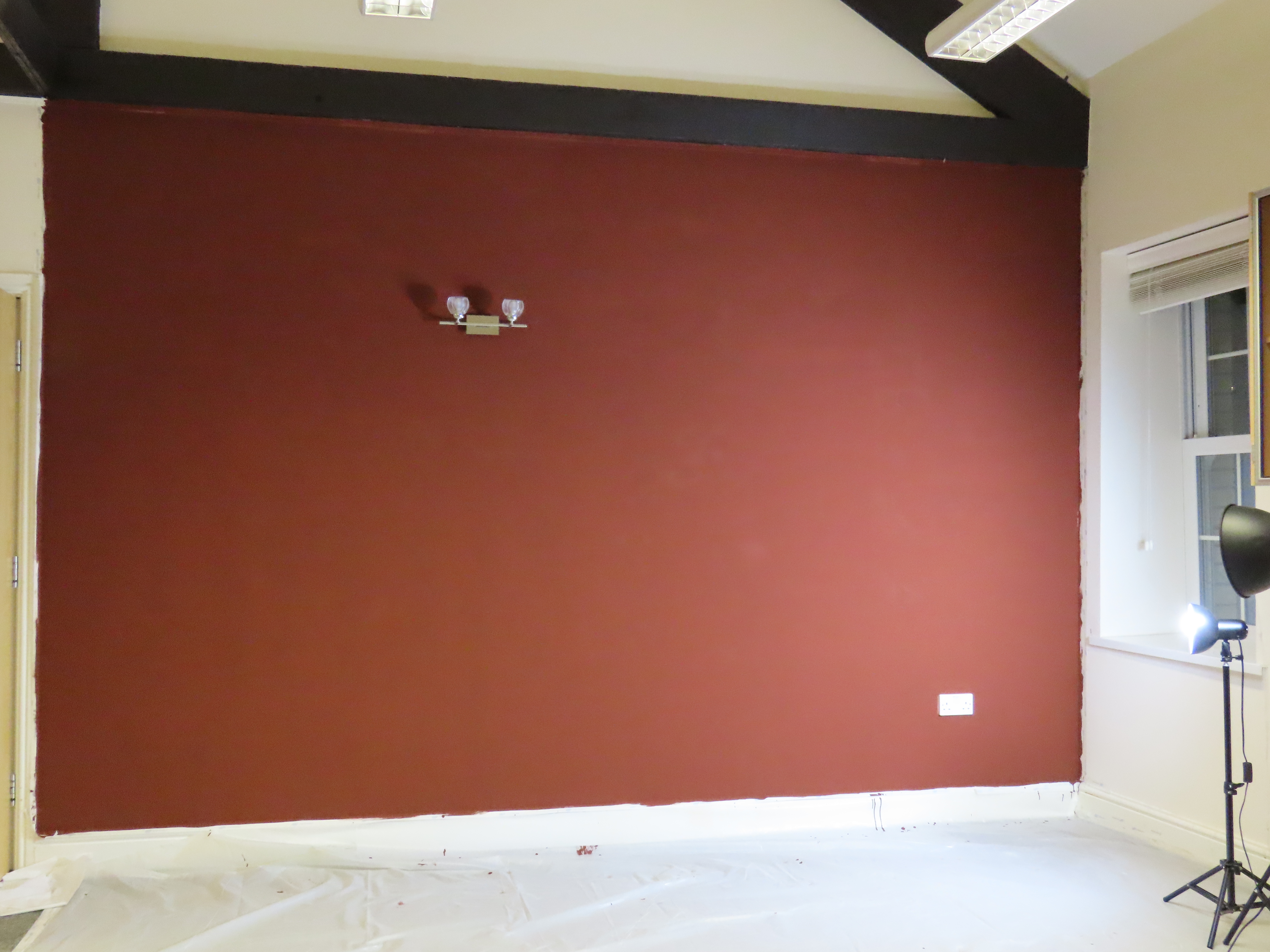
The wall in Ty Ebbw Fach that was painted live as part of the launch event on the 11 December 2020
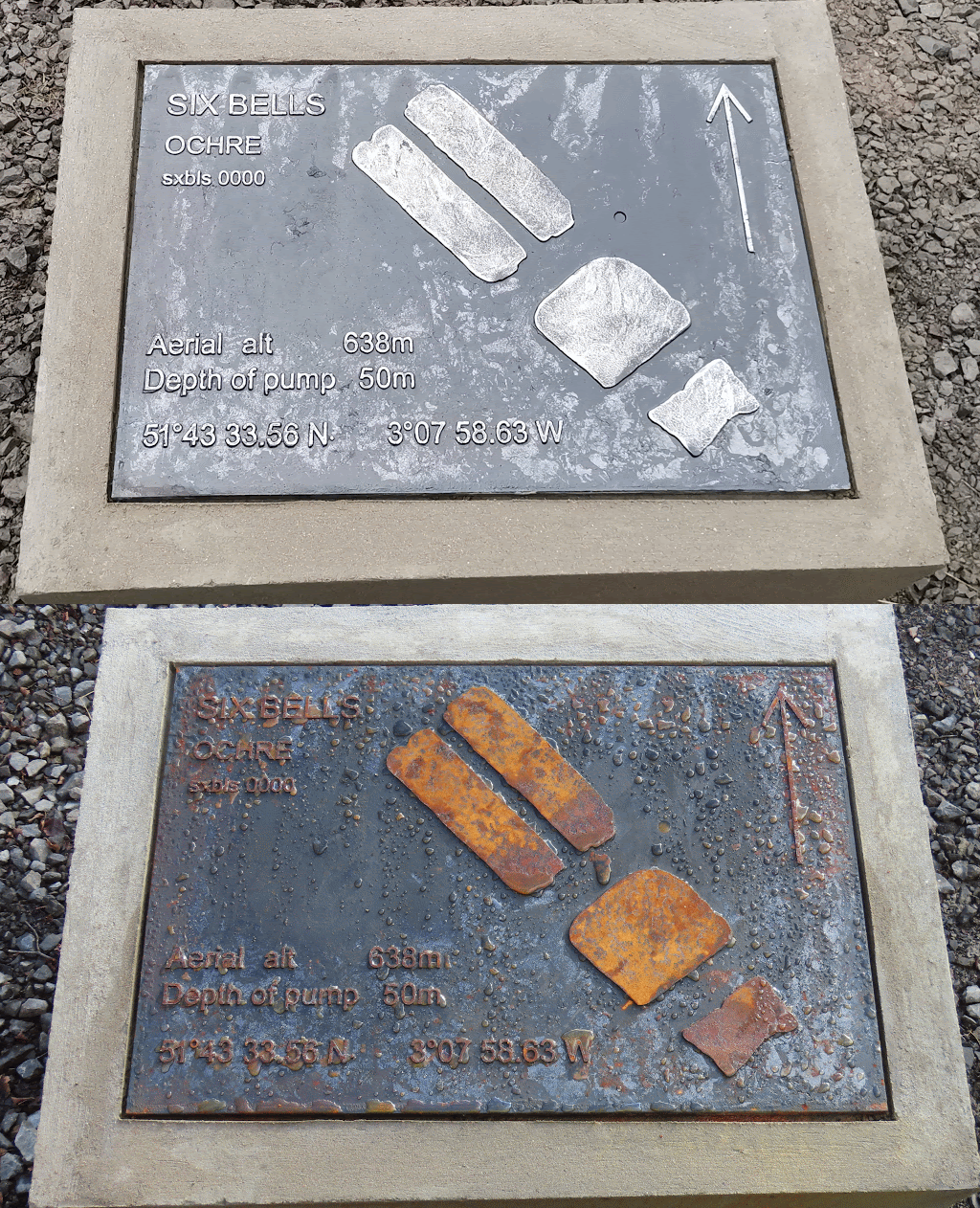
4K Video of Plaque Taken 23 December 2020
Background to Colour from the Mines
This project is led by artist Onya McCausland from UCL Slade School of Fine Art. Onya's practice develops an original and innovative approach to the role of the art object by making paint - including integrating its site of formation - as an artwork, in co-produced with manufacturers and members of the local ex-mining community. Paint in tubes and tins are considered as art objects and editioned for distribution and use by the public.
Onya McCausland developed the idea of recycling the coal mine sludge into paint while travelling around the country collecting samples of ochre from mine sites across former British coalfields in South Wales, Scotland, Lancashire and Yorkshire.
Further examples of Onya’s works can be found here: https://onyamccausland.com/ucl/
Six Bells is the first of five former coal mining sites around the UK that will take part in this project. The next one will be Saltburn near Middlesborough, followed by Cuthill West Lothian, Deerplay Hill in Lancashire, and finally back to South Wales Tan-y-Garn beside Ammanford.
It has been generously supported by the UK Coal Authority.
The project has been funded by the Leverhulme Trust, the Slade School of Fine Art and UCLInnovation & Enterprise, with support from Michael Harding.

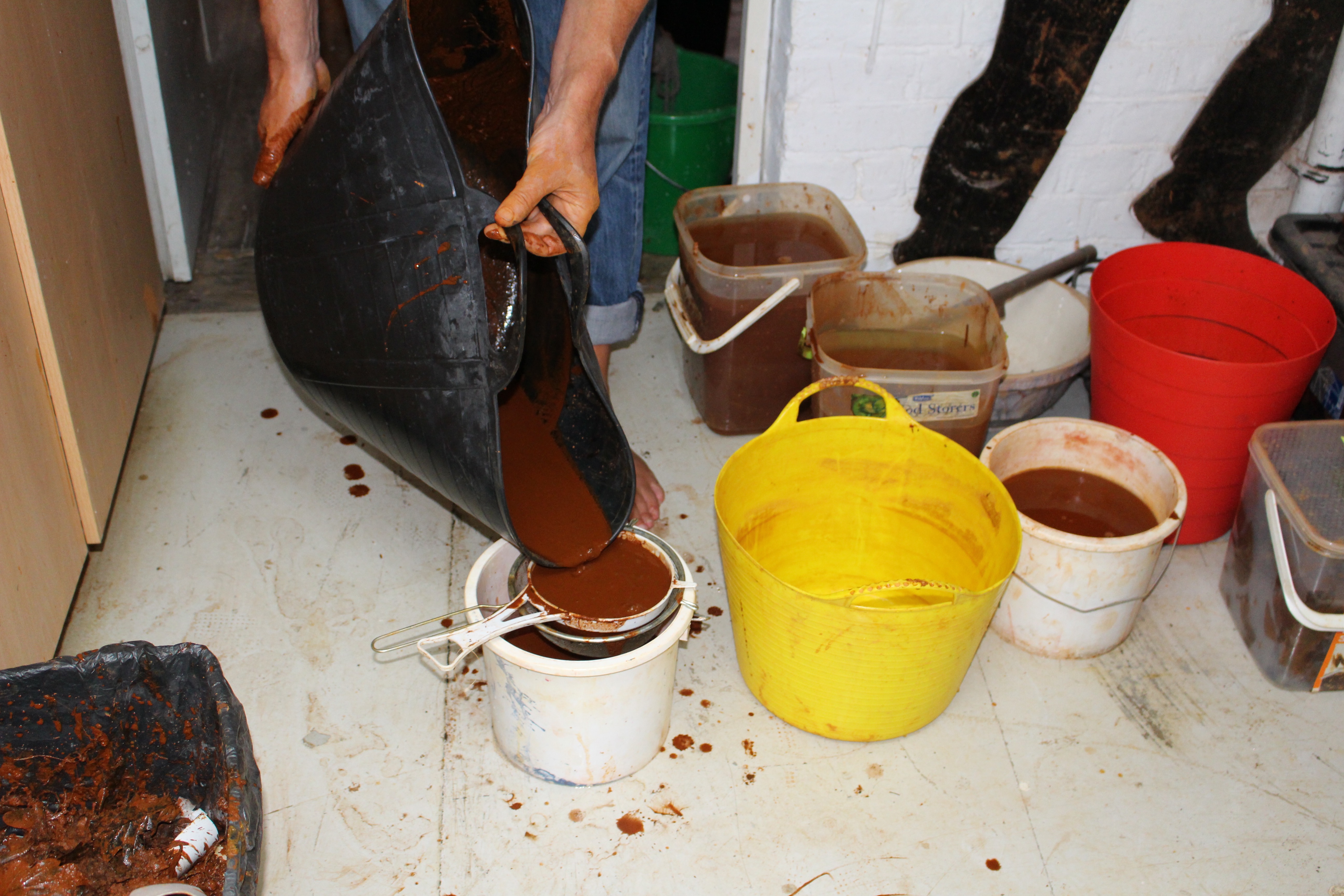
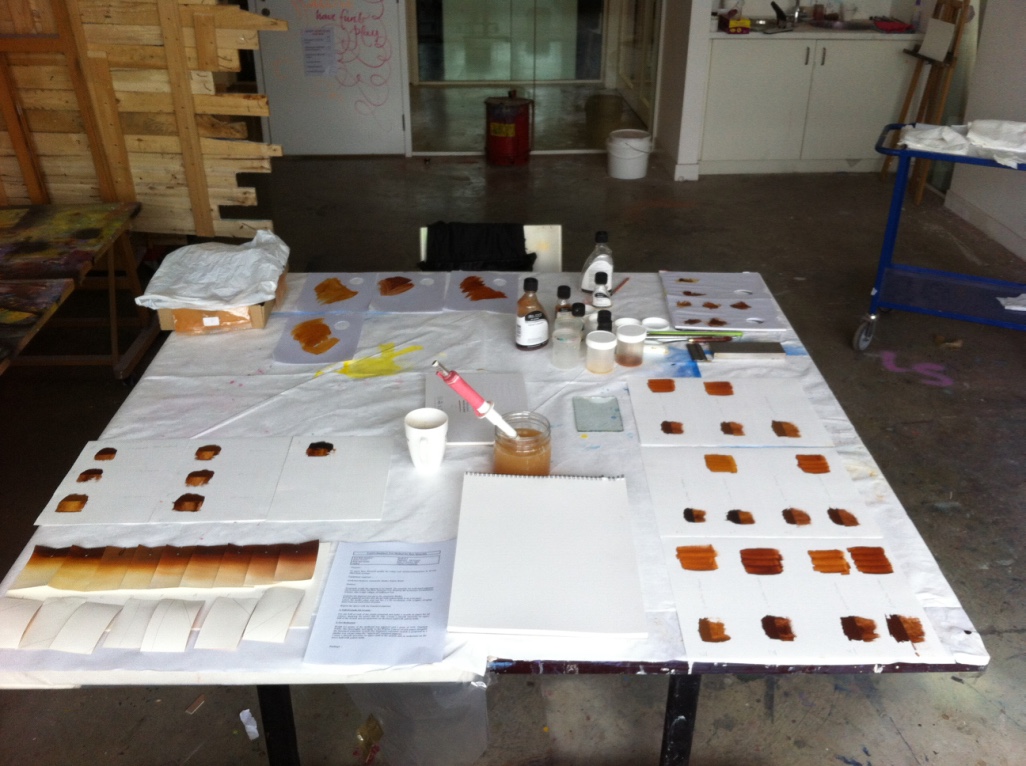
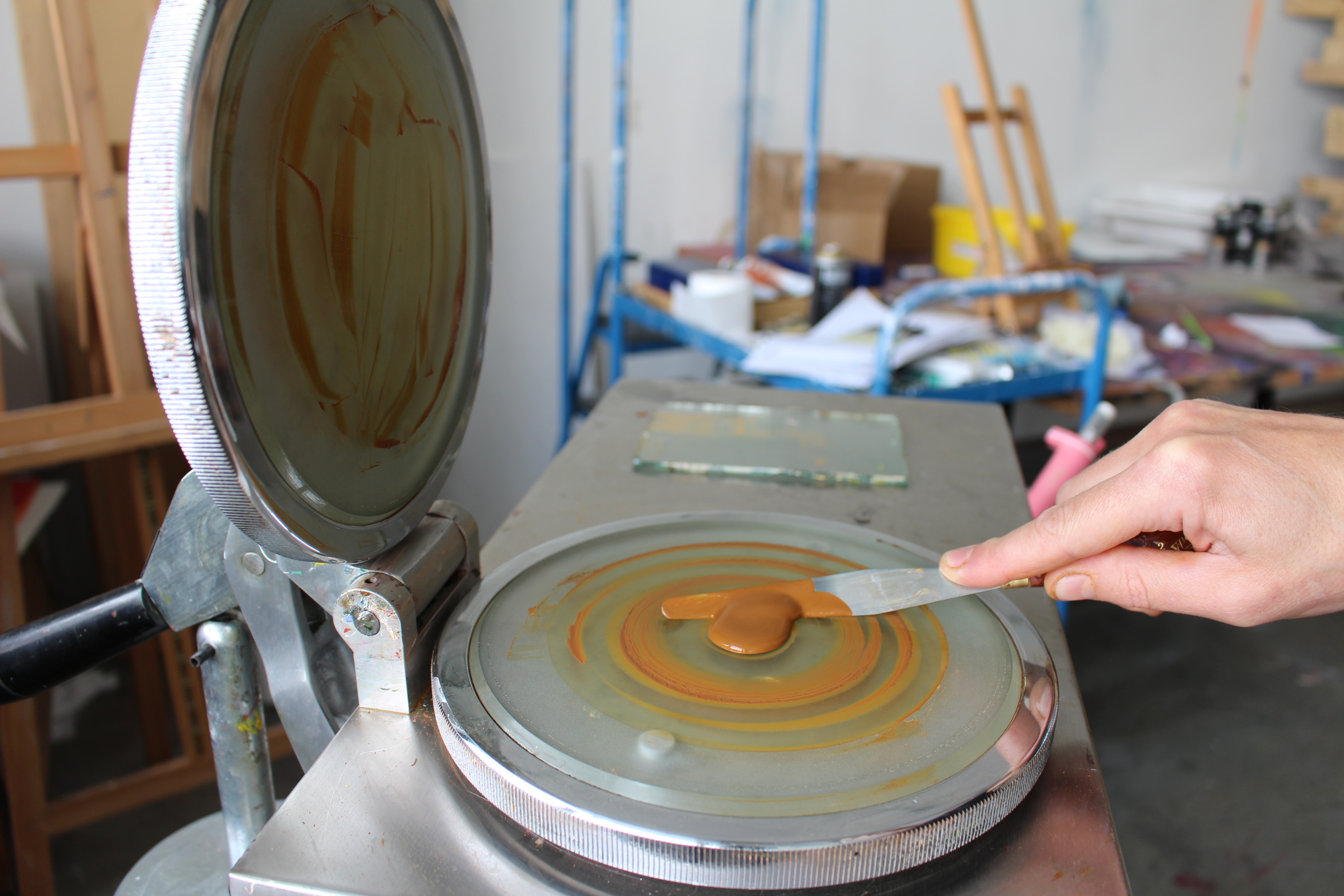
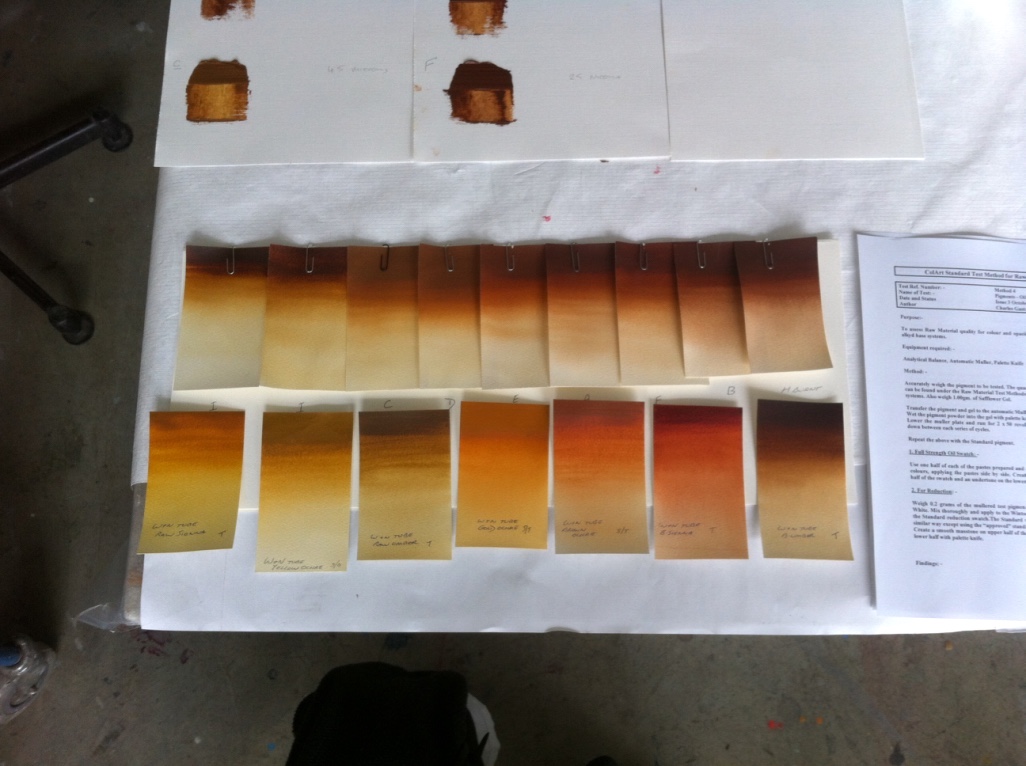
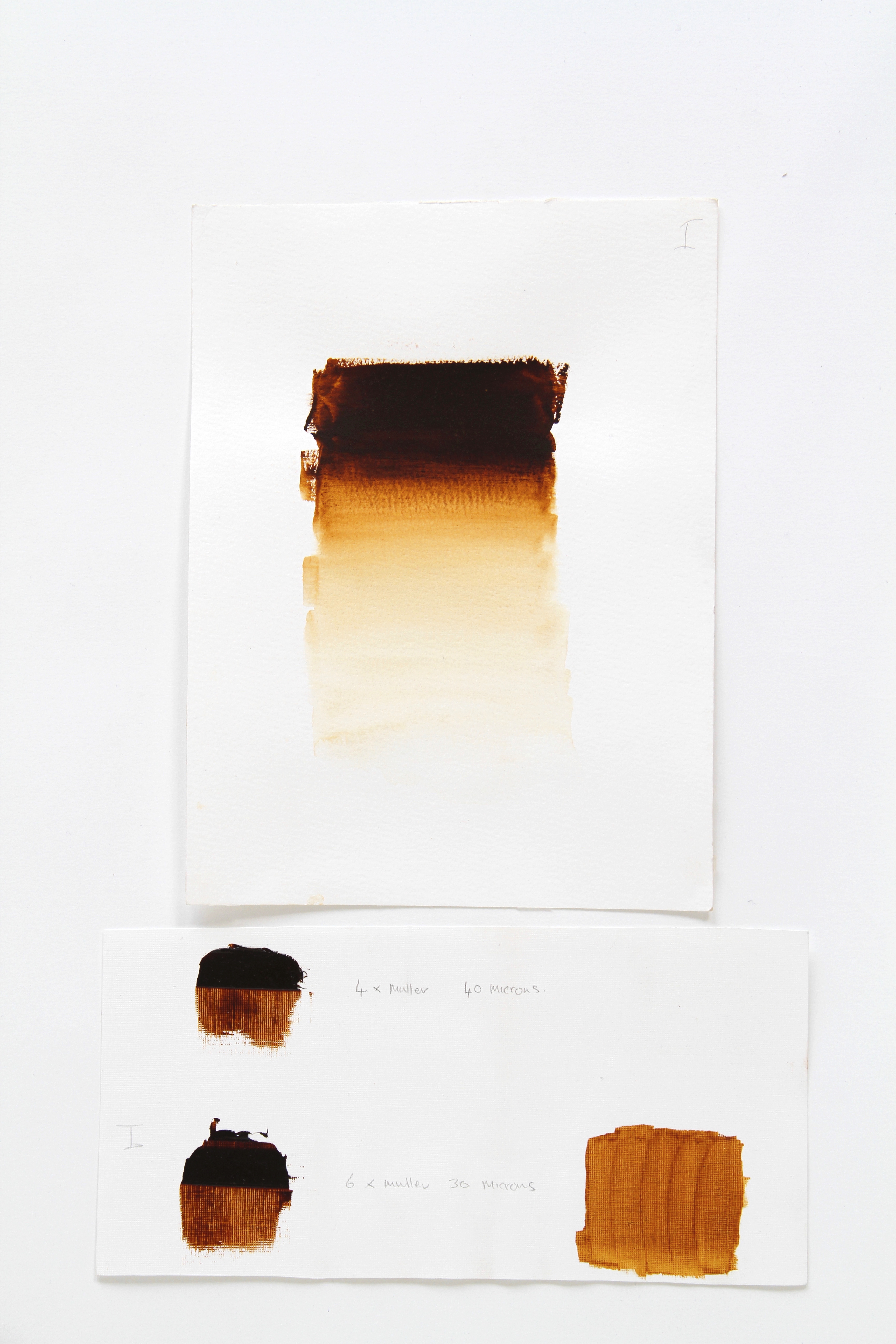
A Sustainable Pigment Factory
The focus of the work has turned to five sites where ochre is in formation - Six Bells and Tan-y-Garn mine water treatment schemes in South Wales together with three others in Scotland, Lancashire and North Yorkshire. These sites will become the first-ever functioning industrial sites to be associated with, and named as a sustainable source of colour: an incidental pigment factory. The sites and their colour will be recognised and acknowledged as part of the cultural, social and industrial history of the UK.
Water pumped from the flooding cavities of redundant coal mines inadvertently produces over 4000 tonnes of iron-oxide ‘ochre’ material as ‘waste’ ochre sludge every year. This largely untapped source of ochre presents an opportunity for the development of new earth pigment for use in paint that retains the identity of its material formation in the landscape. This is in contrast to currently available natural ochres from unsustainable unnamed sources across the globe.
The lakes of colour in the ground are the Mine Water Treatment Schemes run and managed by the Coal Authority. They inadvertently perform the production of ochre waste as part of the clean-up of polluting ground water and contaminated land. The lakes signify an event occurring in the post-industrial, post-carbon landscape and are defined and highlighted here as performing a cultural act and recognised as artworks.
Cultural Materials
The ochres are distinguished by the quality and indivudality of their colour that describes the particular conditions of their landscape context which are intricately linked to the history and legacy of the coal mining industry; to the hands that worked this industry. The use of the coal mine waste materials as pigment for paint recognises for the first time their position as part of the cultural landscape of the UK.
Over the past year we have been developing the project in consultaion with the particpants from the community at Ty Ebbw Fach / Six Bells Regeneration to collectively explore the value and significance of the materials for the people whose experiences are shaped by the mining landscape and its legacies. Beginning in January 2020 a number of public events have taken place, starting with meeting retired coal mine surveyors and workers who talked about their knowledge and memories of the mines.
This has been leading up towards the launch of the first ever mineral based wall emulsion paint and oil paint made in collaboration with two world class paint manufacturers local to the area.
The ongoing programme of work is developed through close collaboration with the Coal Authority.
Over the course of its evolution this work has had significant contributions from Dr. Ruth Siddall geologist and pigment analyst at UCL; Prof. David Dobson from the Department of Earth Science UCL, Jo Volley, Deputy Director (projects) Slade School of Fine Art and Spike Bucklow, Reader in Material Culture, University of Cambridge.
TLiC is the research site of artist Onya McCausland.
McCausland, O Turning Landscape into Colour 2017
For more updates on Colour from the Mines 2020 please follow the project on social media:
Website: https://onyamccausland.com/
Twitter: @turningland
Instagram: @onyawildermccausland, @onyamccausland
Ty Ebbw Fach
Ty Ebbw Fach was a former pub turned community centre in the village of Six Bells where this work first began. The people that lived nearby were involed in the early stages of developing projects and defining the aims and ambitions for the work.
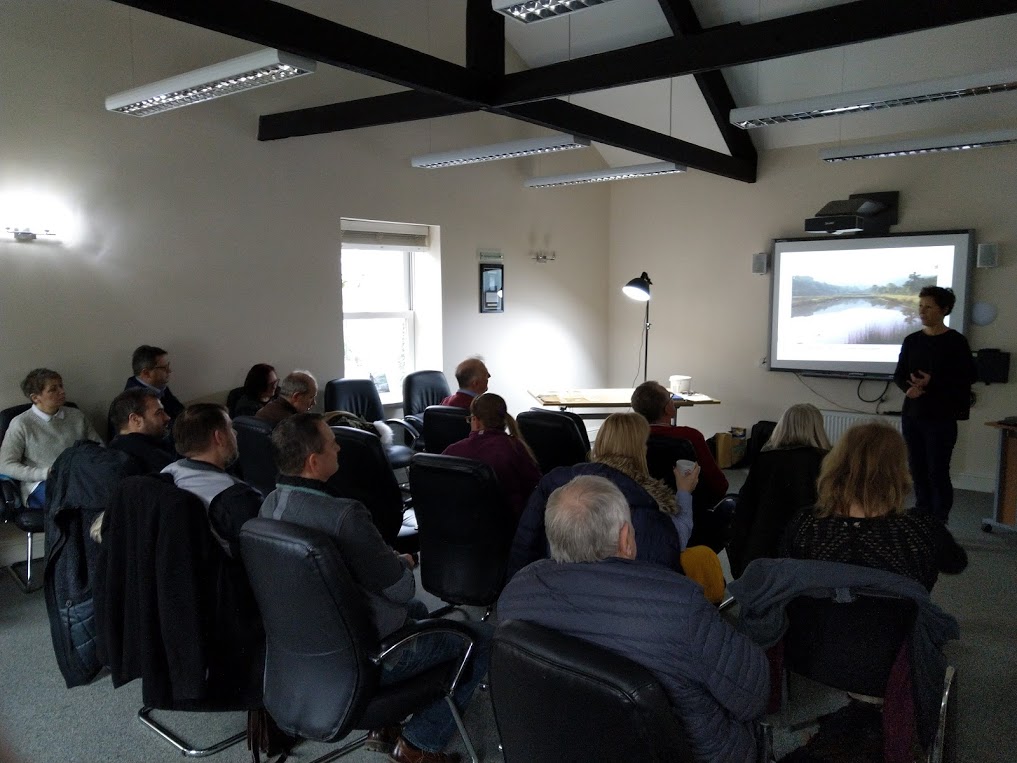
Mining Surveyors
Local miners and mine surveyors attended and talked about their experiences of the mines directly under us at Six Bells. They brought maps of the mine working and we discussed the infrastructure and daily working of the mines as they recalled it.
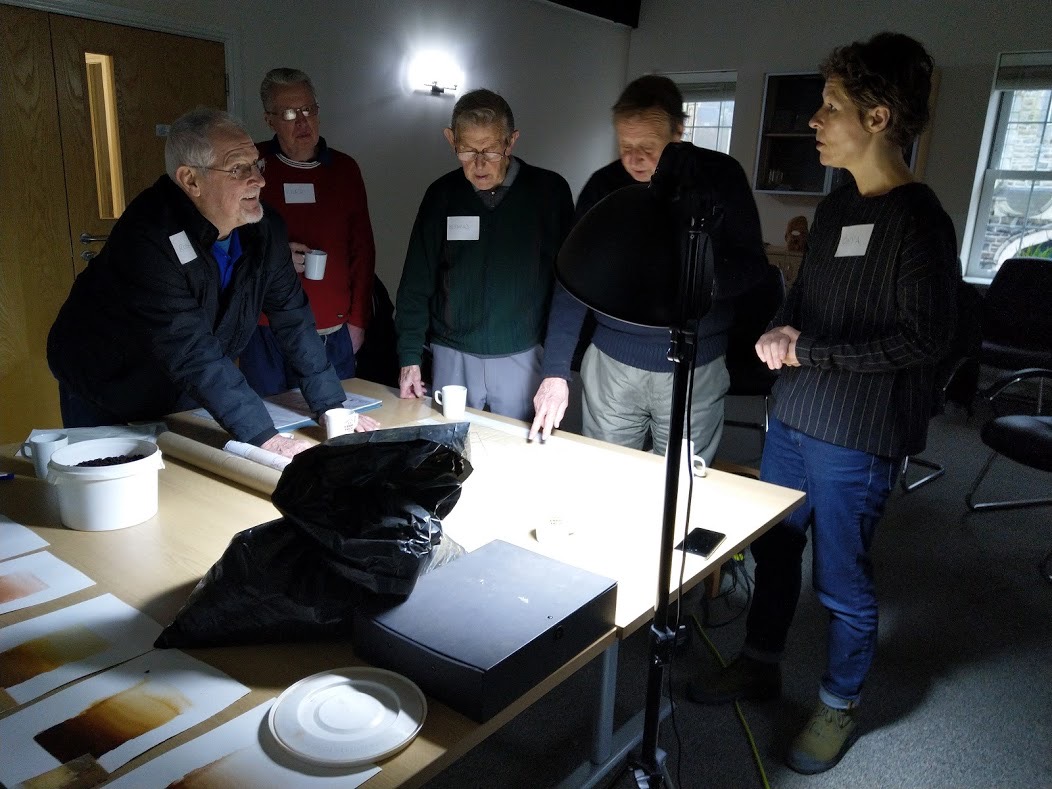
Retired mine surveyors Robert, Kerry, Bernard and Ray Feburary 2020
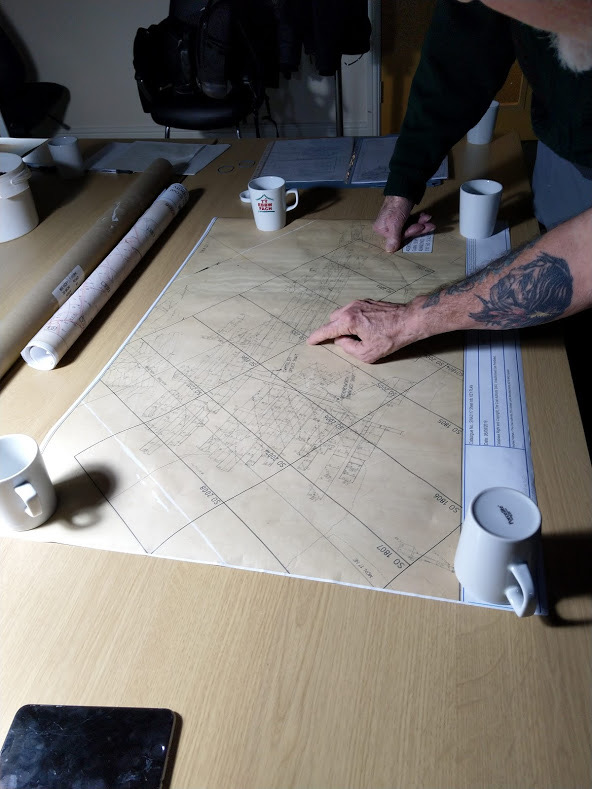
The collaboration between Onya McCausland, the local community through Ty Ebbw Fach at Six Bells and the Coal Authority draws attention to mining heretage that proposes these colours as a new alternative legacy.
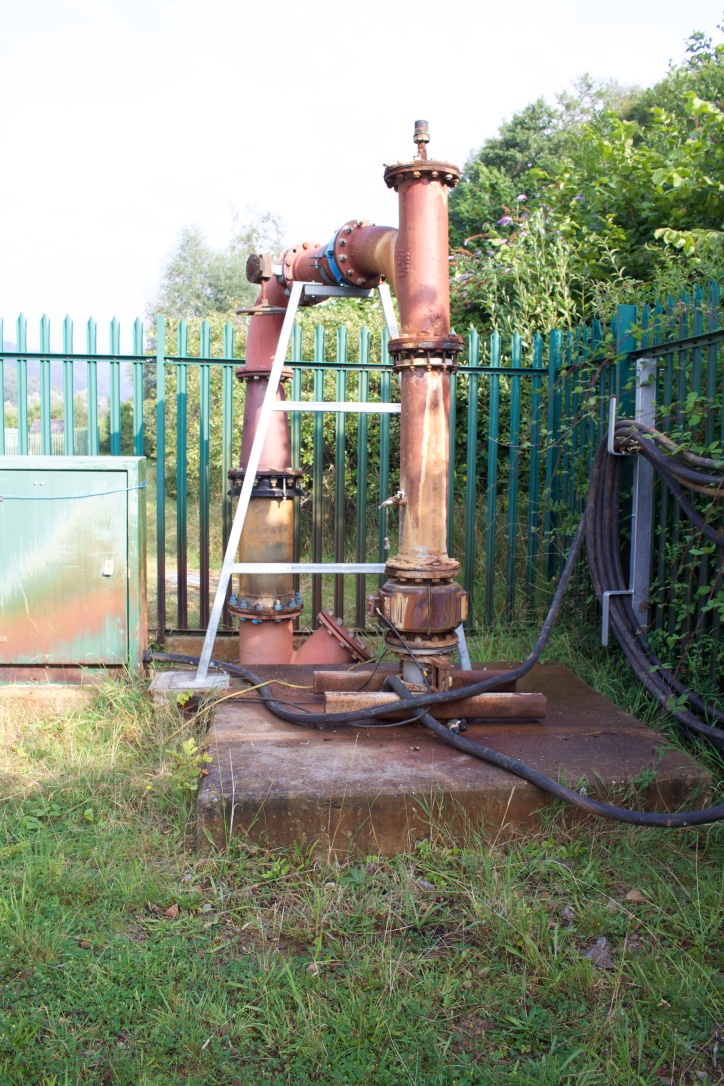
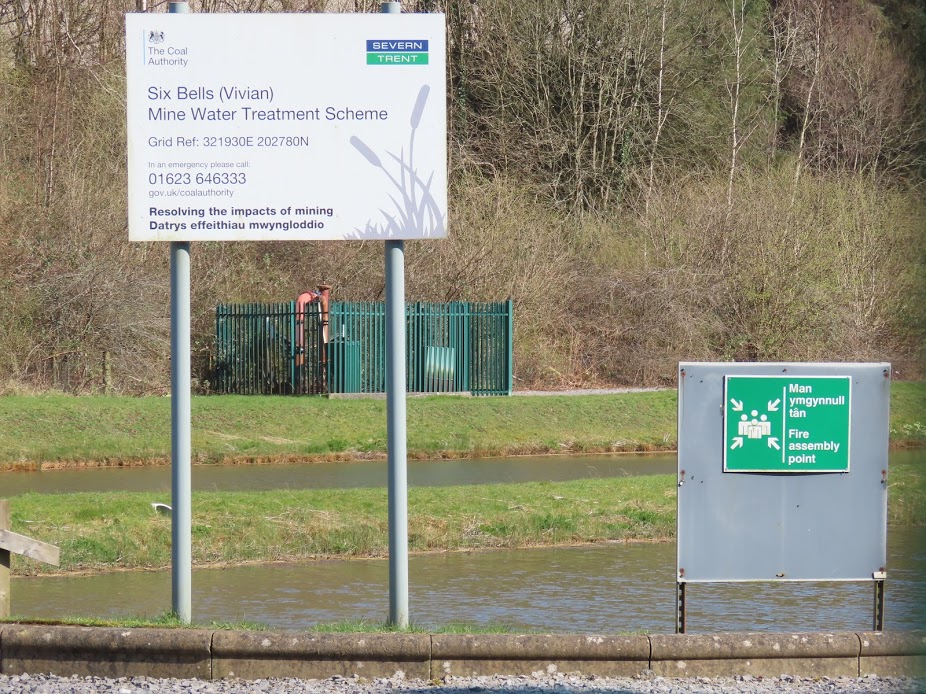
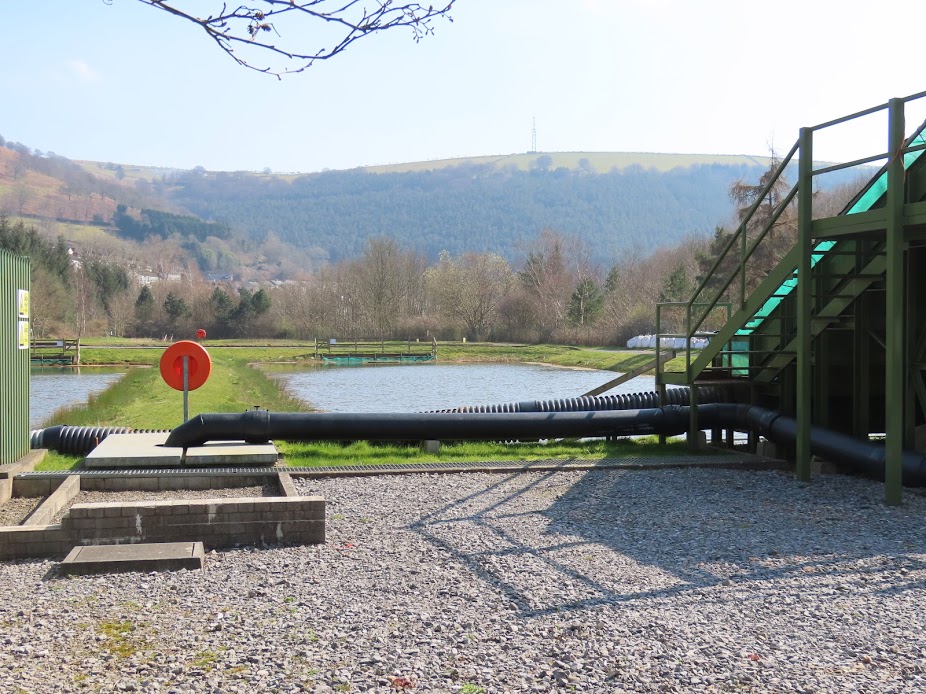
Images of Six Bells Mine Water Treatment works:
Watercolour made from mine residues

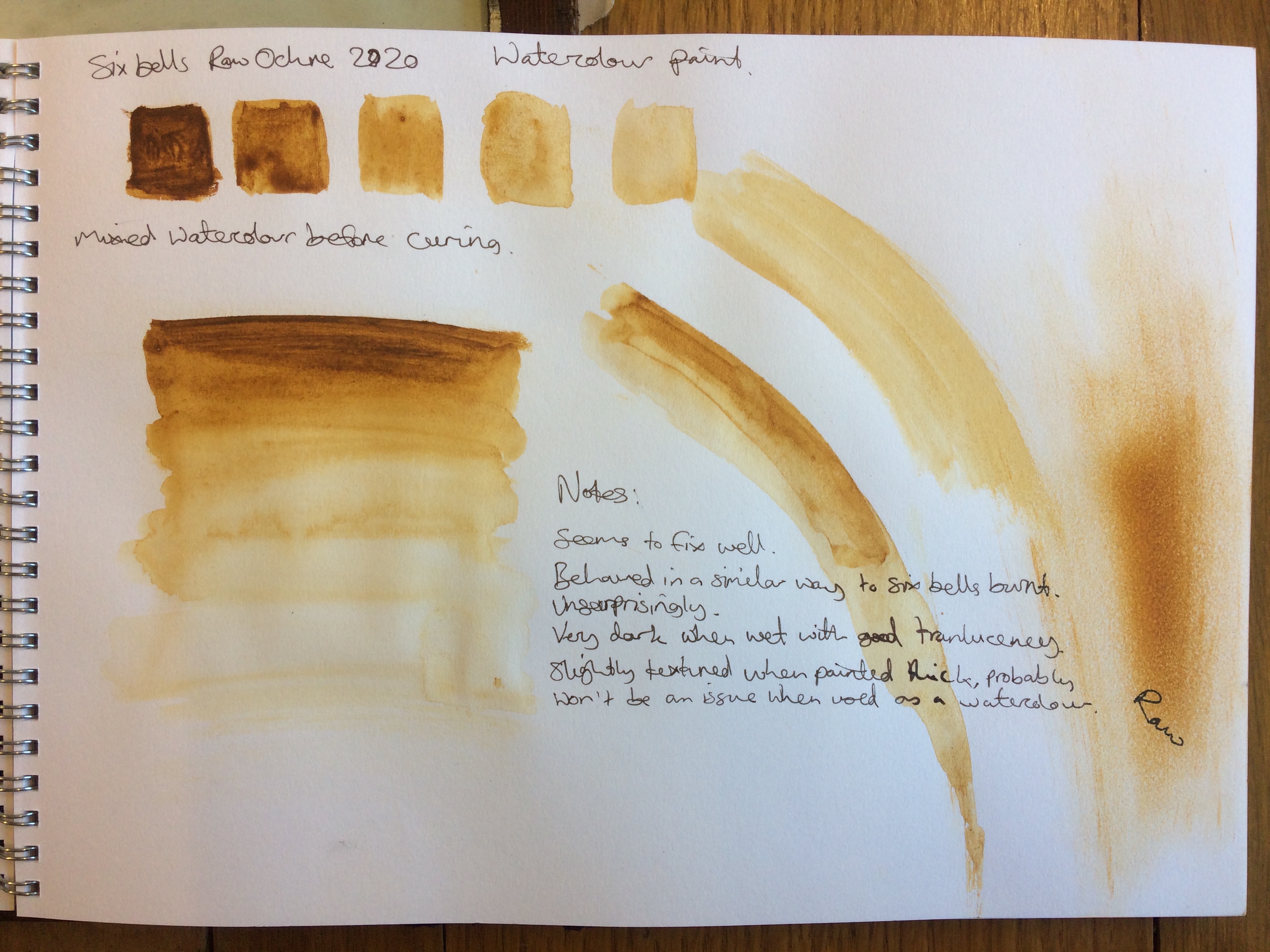
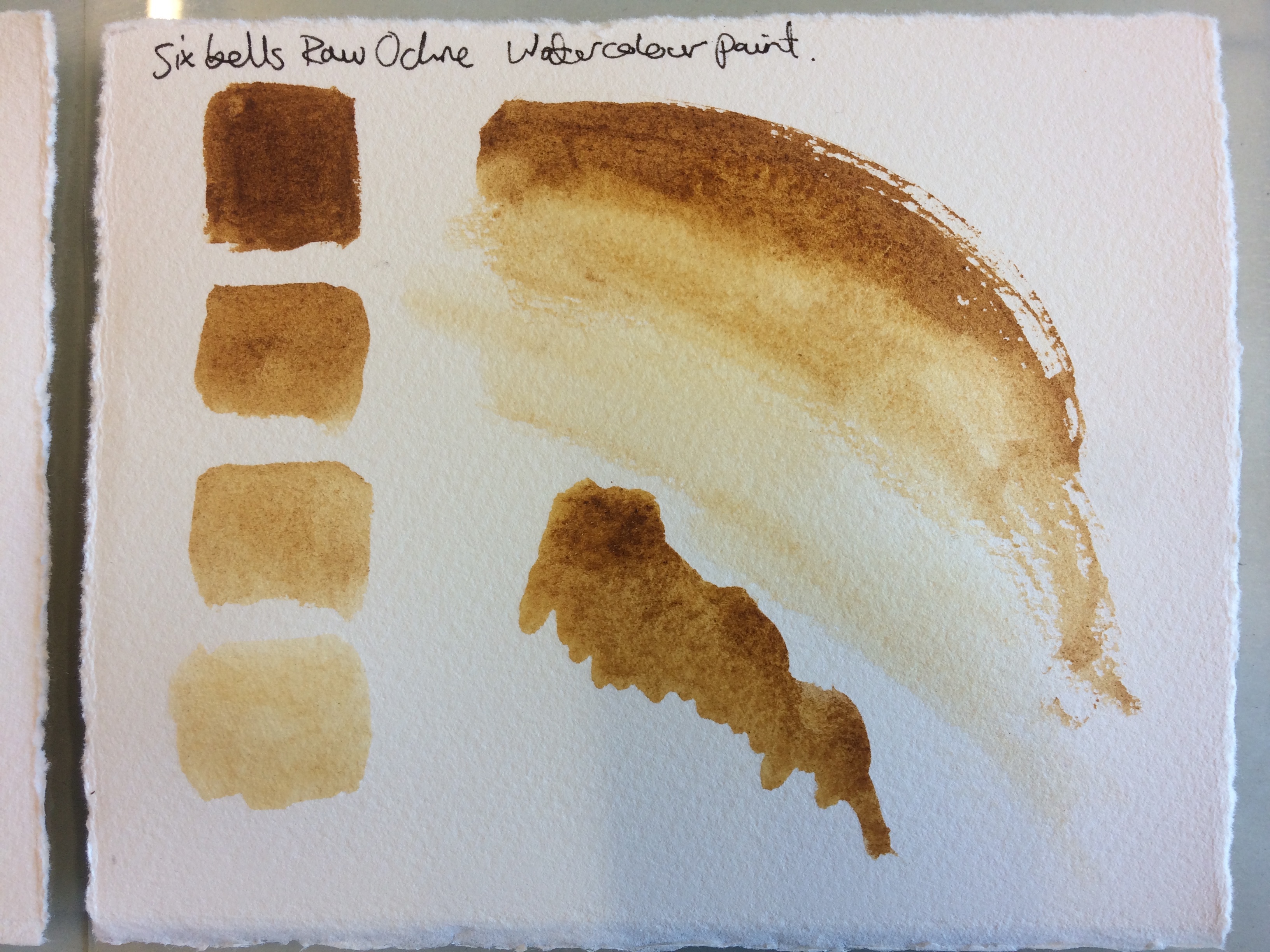
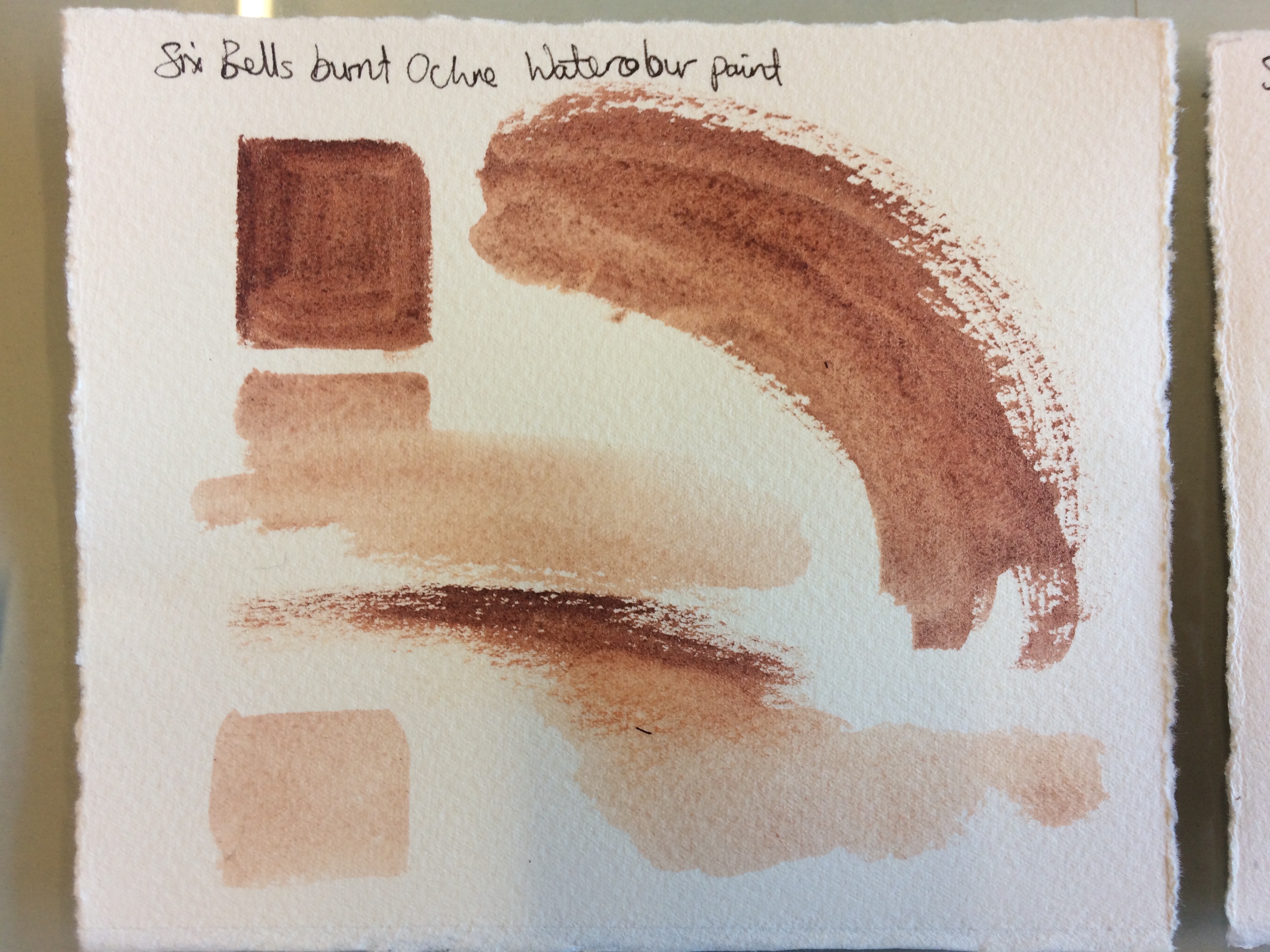
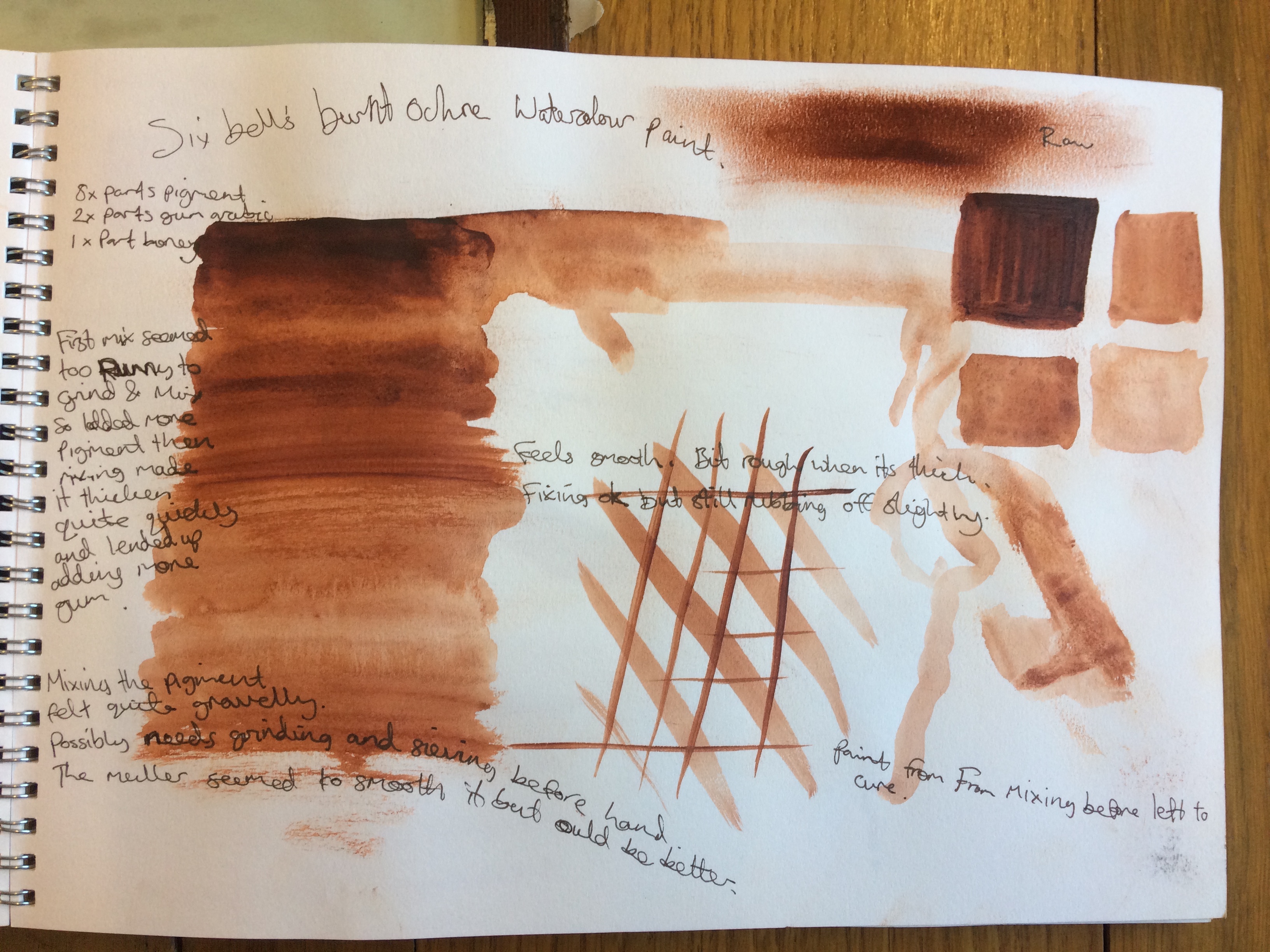
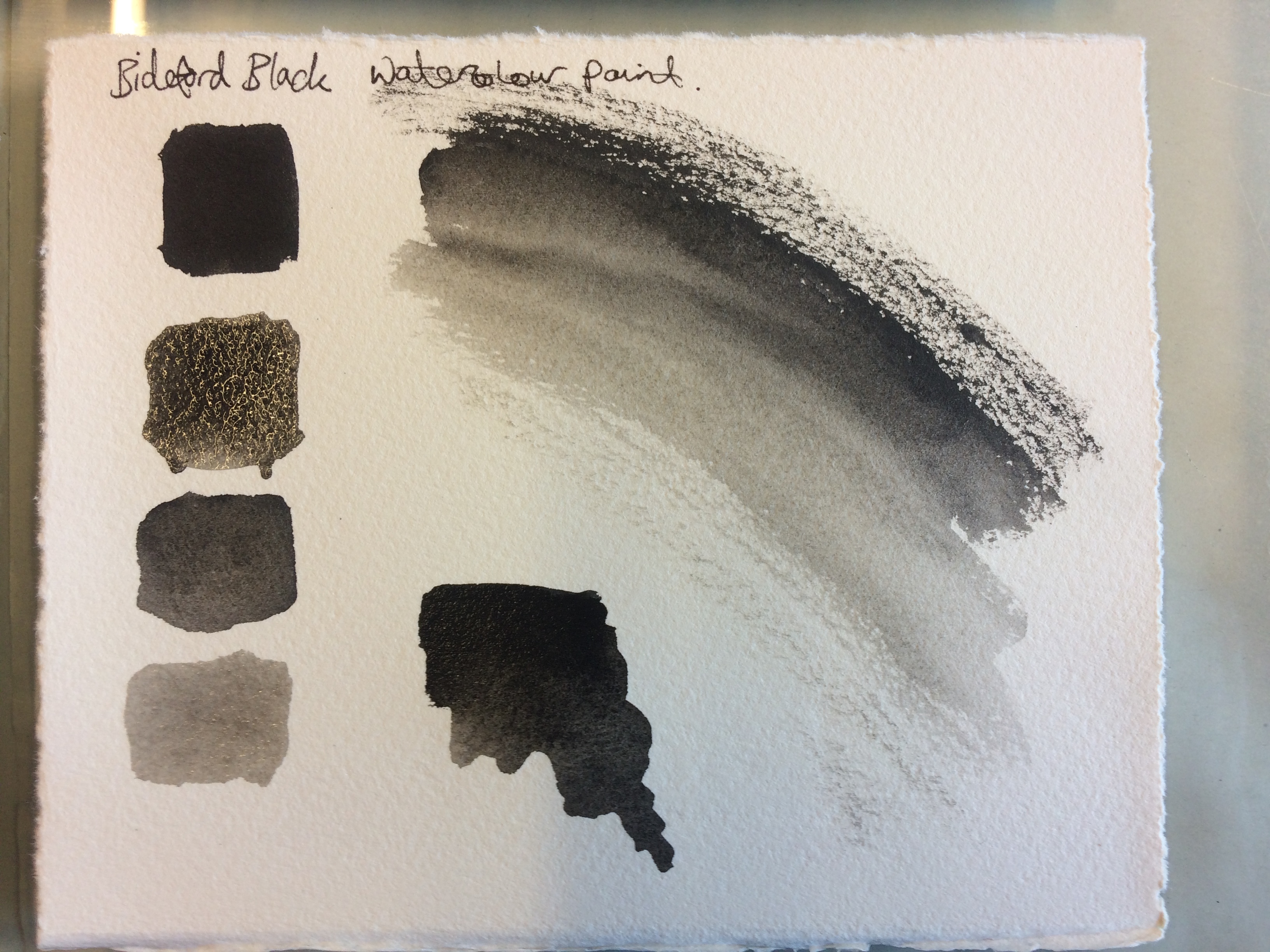
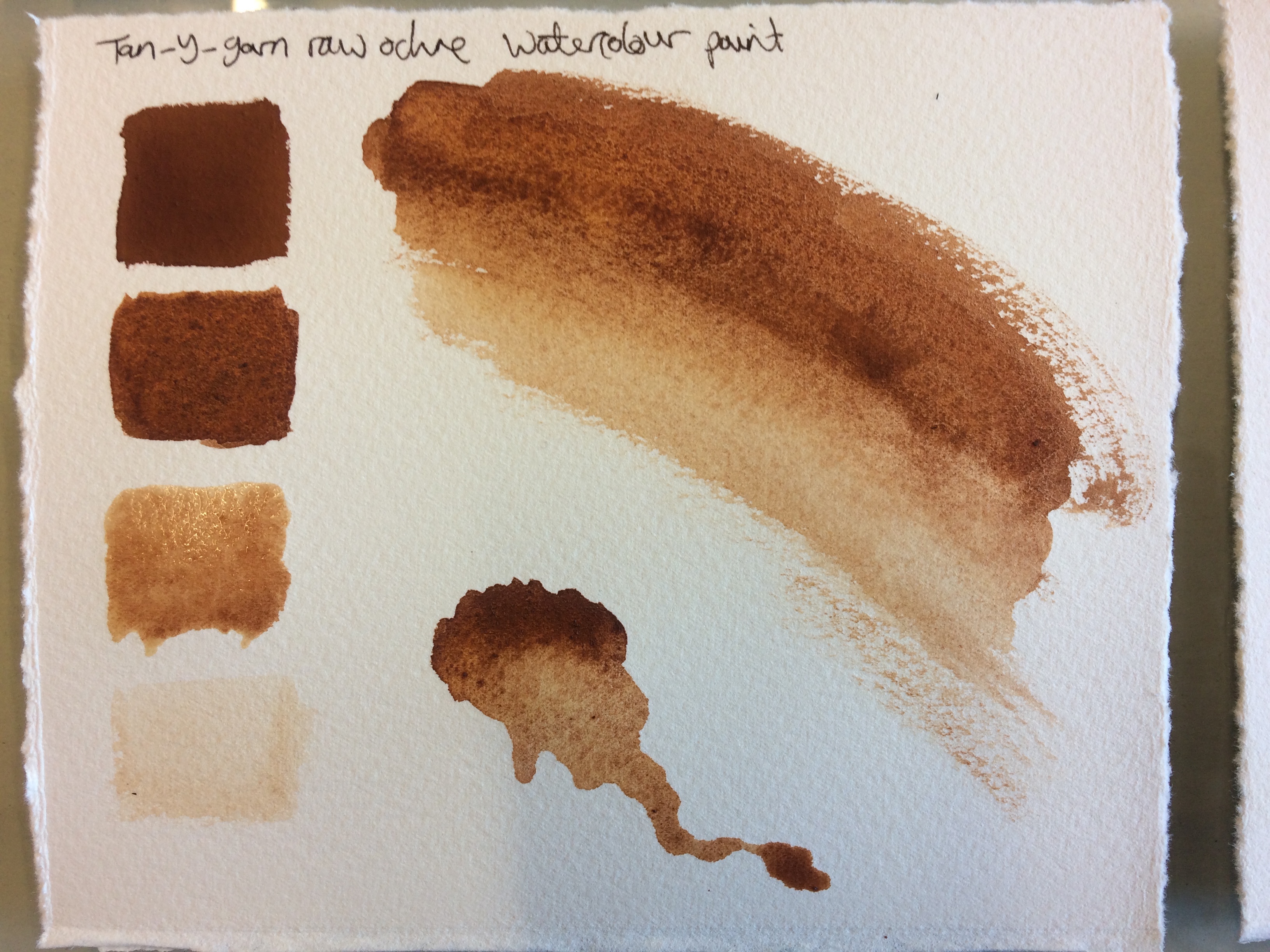
In 2020 artist and printmaker Nichola Goff made 4 watercolour sets, each with 4 different pigments from the mines. Each set is made up of individual watercolour pans using pigment from Six Bells (raw and burnt ochre) Tan-y-Garn (Ammanford) ochre and Bideford black (Devon).
The watercolours were first used during Covid-19 pandemic. Each set was sent out to people living in the Six Bells area so they could try out using the colours first hand. Nichola made the following video demonstrations of the process of mixing the paints and how they look and feel different to use. The final video gives some guidance for those using the watercolours. Along with the watercolour sets we posted paper, brushes and note books asking that people record their experience of using the pigments.
The enthusiastic and moving response to this call out can be seen here:
Facebook : Colour From The Mines : https://www.facebook.com/groups/ColourFromTheMines
Six Bells Raw Ochre
Six Bells Burnt Ochre
Tan-y-Garn Raw Ochre Process
Bideford (Coal) Black
Demo: Watercolours sets demonstration
Watercolour sketchbook


Coal Authority Video
Aerial Landscapes
Visibility
One of the striking things about the Mine Water Treatment Sites is their visibility, but not usually from the ground, as despite the intensity of the colours the sites themselves are usually hidden behind fences, off tracks, along relatively inaccessible stretches of land - but from above through Google Earth they are clearly discernible, sometimes from many kilometres ‘up’. I have found the sites on Google Maps on my iphone, if the site can’t be found by its nearest post code, then I pull over to zoom out and up to see where I am, and where the site is.
 Cuthill 55°50 59.82 N 3°36 34.65 W 513m
 Saltburn 54°34 07.37 N 0°57 42.87 W 1130m
 Deerplay Hill 53°44 07.95 N 2°12 10.84 W. 1460m
 Six Bells 51°43 33.56 N 3°07 58.63 W 638m
  Tan-y-Garn 51° 46 10.01 N 3° 59 05.93 W 418m
Vanishing Point
The satellite images of the earth that have helped construct these journeys have become part of the imagination of these landscapes. Seeing; finding the site from above and arriving on the ground by van, walking and digging out buckets of ochre sludge from the settling lagoons: Perception of these colours/places is partly shaped by Google Earth - I see the colour through the satellite’s eye. How to separate these different images; from above, from the ground and from underground.
Link
Flat Time House (FTHo) website: http://flattimeho.org.uk/events/aerial-landscapes/